Winter has always tested painters. Its palette is narrow. Its light is fleeting. Its stillness can flatten a scene into a quiet monotone. However, in the hands of Claude Monet, Camille Pissarro, Andrew Wyeth, and Winslow Homer, winter becomes something else entirely. It is a stage for subtle drama, emotional clarity, and the strange brilliance of cold light.
Winter as an Impression of Light
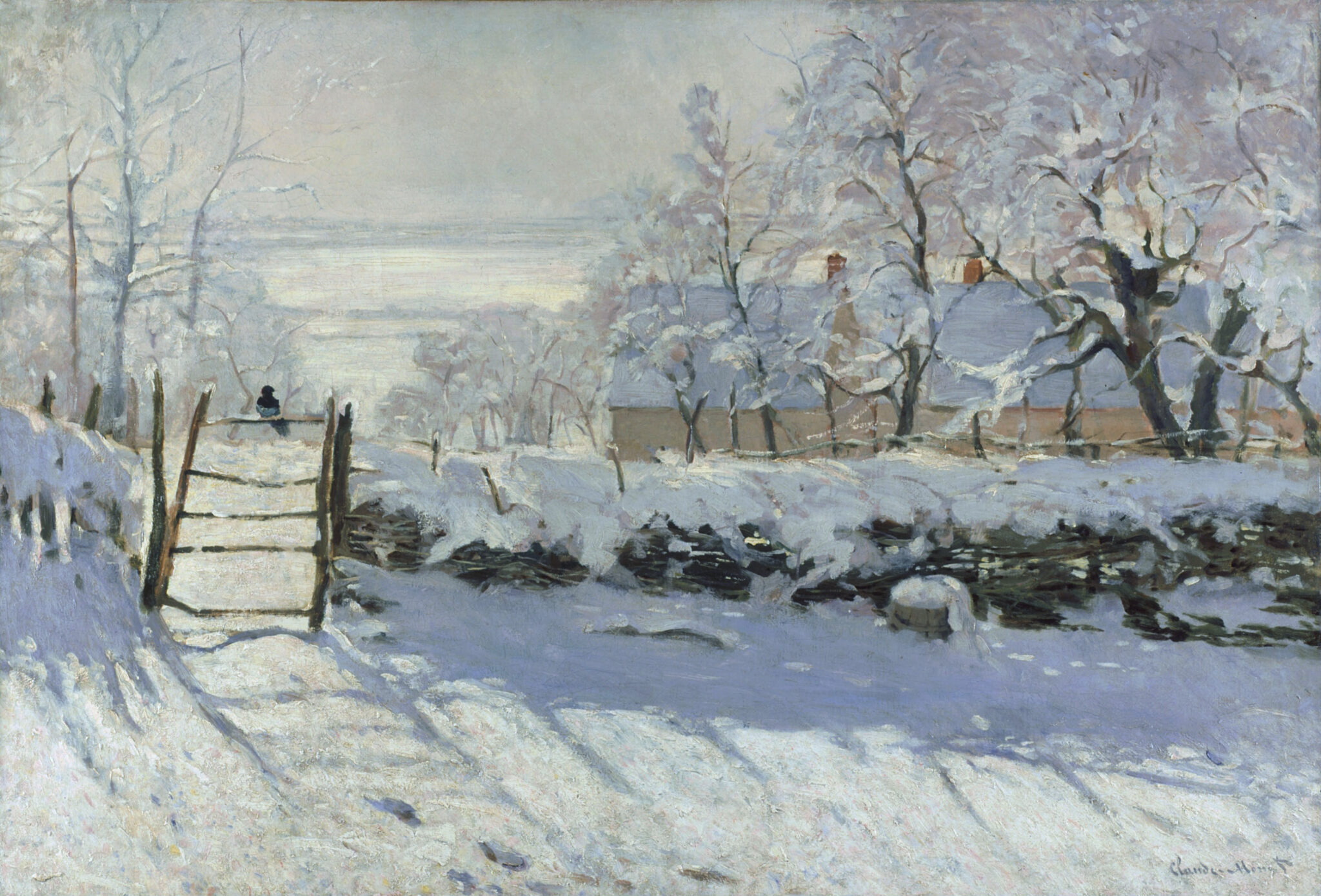
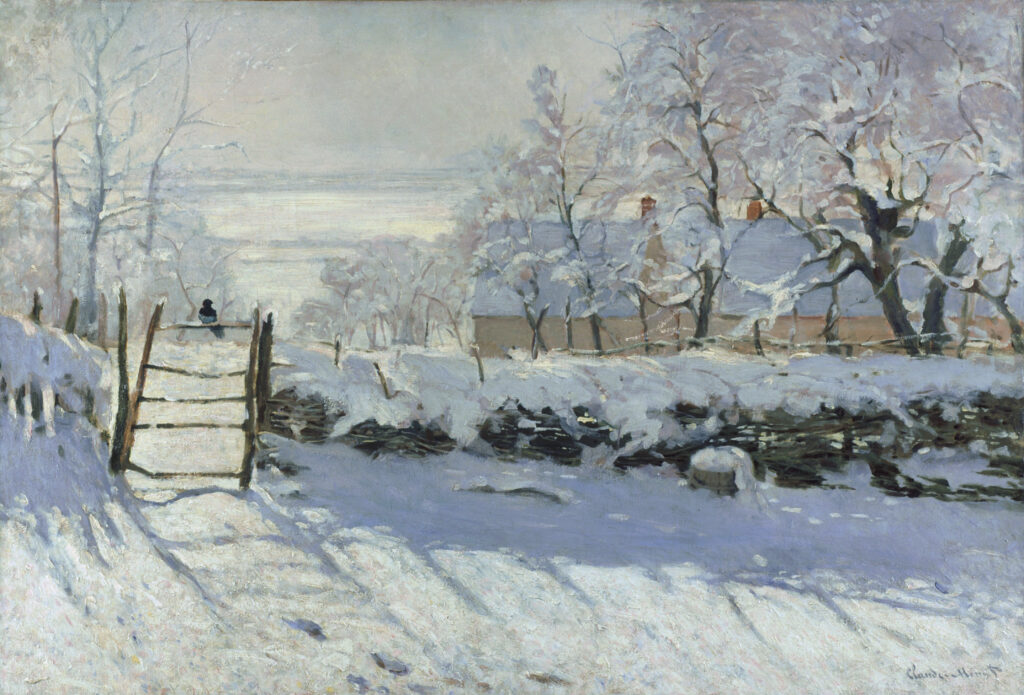
For Monet, winter was not a time of scarcity but a time of revelation. The master of atmospheric effects often turned to snow-covered fields and icy rivers to study light at its most honest. In works like The Magpie and his Vétheuil in Wintercanvases, Monet used the reflective properties of snow to explore faint but shimmering color.
Here, shadows turn lavender. Snow glows with pale peach or mint green. What should be stark becomes shimmering. Monet didn’t paint winter as cold; rather, he painted it as luminous.
The Quiet Rural Winter
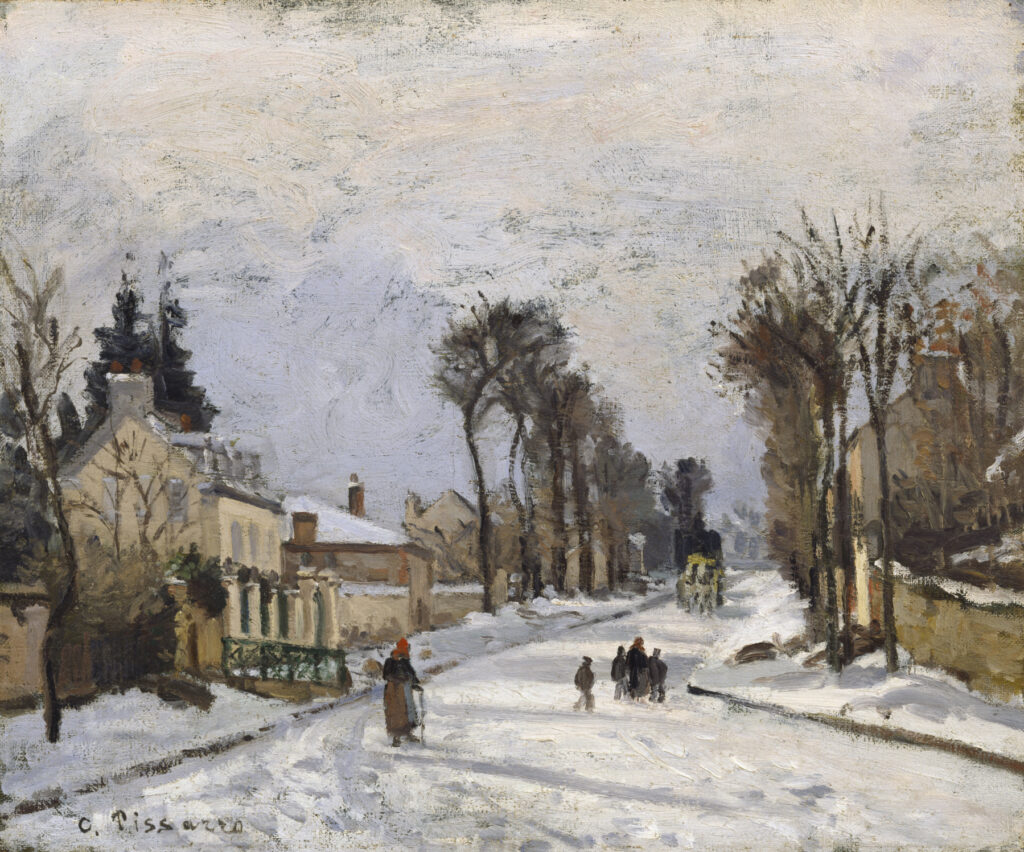
While Monet chased the changing effects of light, Pissarro embraced winter as a record of rural life. His winter works, like The Road to Versailles, Louveciennes, and Snow Effect, feel lived-in. Farmers trudge along roads half-buried in snow while chimneys send smoke into muted skies.
Pissarro’s palette is softer than Monet’s, with gentle restraint. Winter, for him, is a season of labor, community, and continuity. Snow doesn’t transform the world into a spectacle – it settles into the rhythms of the people who inhabit it.
Winter as Solitude
Where Monet and Pissarro saw winter outdoors, Andrew Wyeth saw it inside the psyche. His winter landscapes – Winter 1946, Ring Road, and Snow Flurries – carry Wyeth’s signature austerity. Empty fields, leafless trees, a single figure moving through a desolate slope…the world looks both familiar and strangely haunted.
Wyeth’s winters are not about weather but about emotional landscapes. They evoke memory, loss, resilience, with all of these feelings becoming more sharpened by the season’s bareness. His restrained palette of browns, greys, and bone-white snow turns winter into a meditation.
Winter as Adventure and Survival
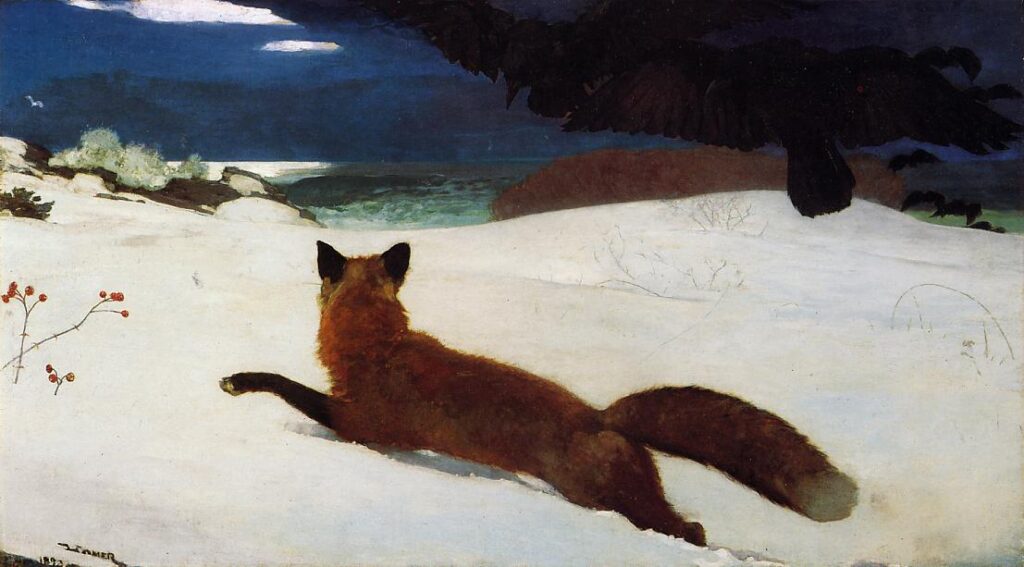
If Wyeth paints winter’s introspective silence, Winslow Homer paints its drama. Homer often depicted winter in the context of the power of nature. In works like The Fox Hunt or Sleigh Ride, winter is dynamic and alive. Wind slices through coats, snowbanks tower, and wildlife is on the move. Homer’s winter scenes emphasize risk, movement, and the tension between humans and the elements. His brush captures the season as both adversary and inspiration.
It’s striking that the same season can unfold so differently. Monet finds color in winter’s light. Pissarro observes its everyday humanity. Wyeth draws out its emotional solitude. Homer captures its rugged drama. Through the eyes of artists, perceptions became reality on the canvas.
Each artist’s winter is a testament that the season is not uniform but endlessly interpretable.
Winter, in art as in life, is what you make of it—quiet, radiant, lonely, or wild.