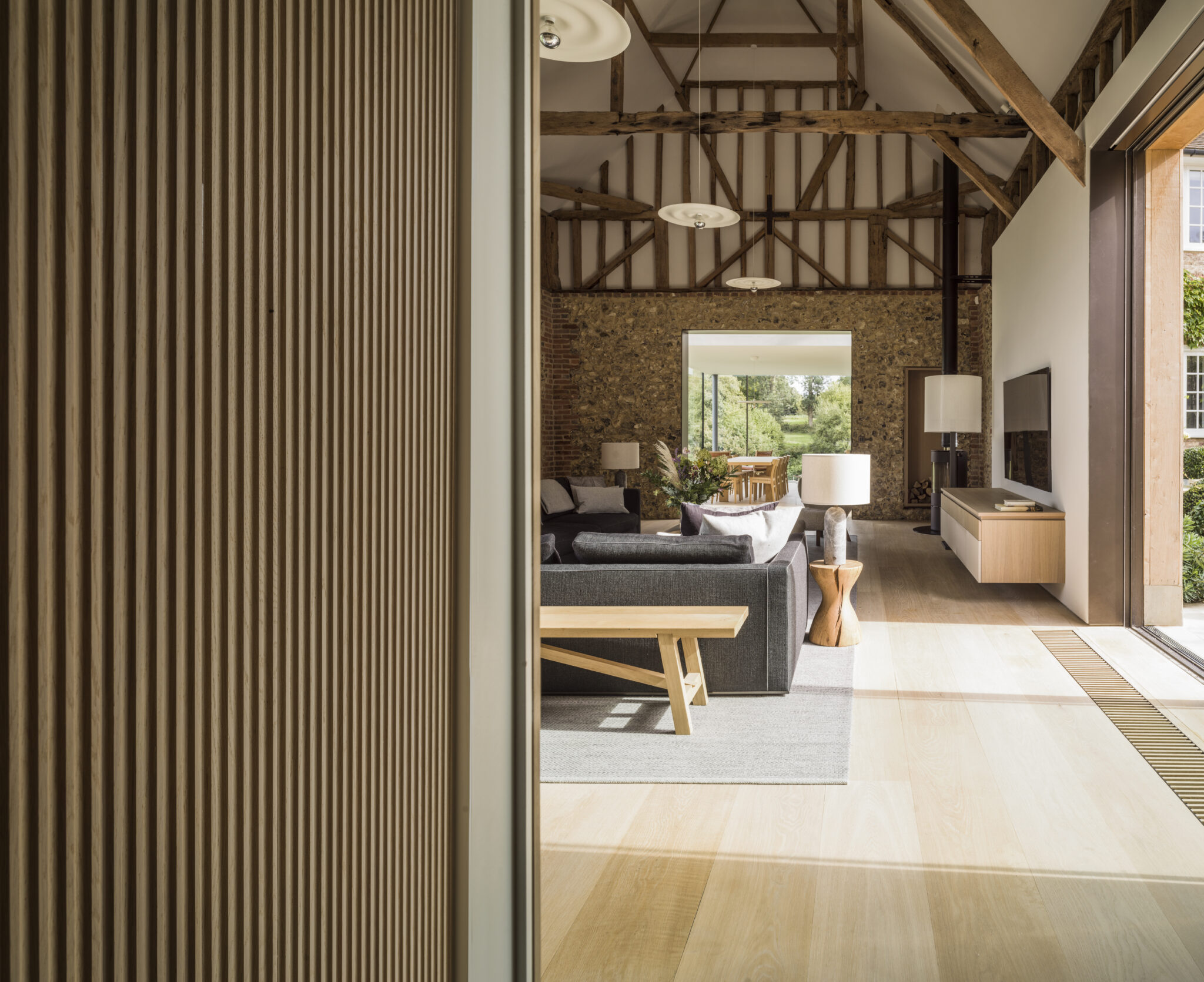
“It’s a lot of things, a house.”
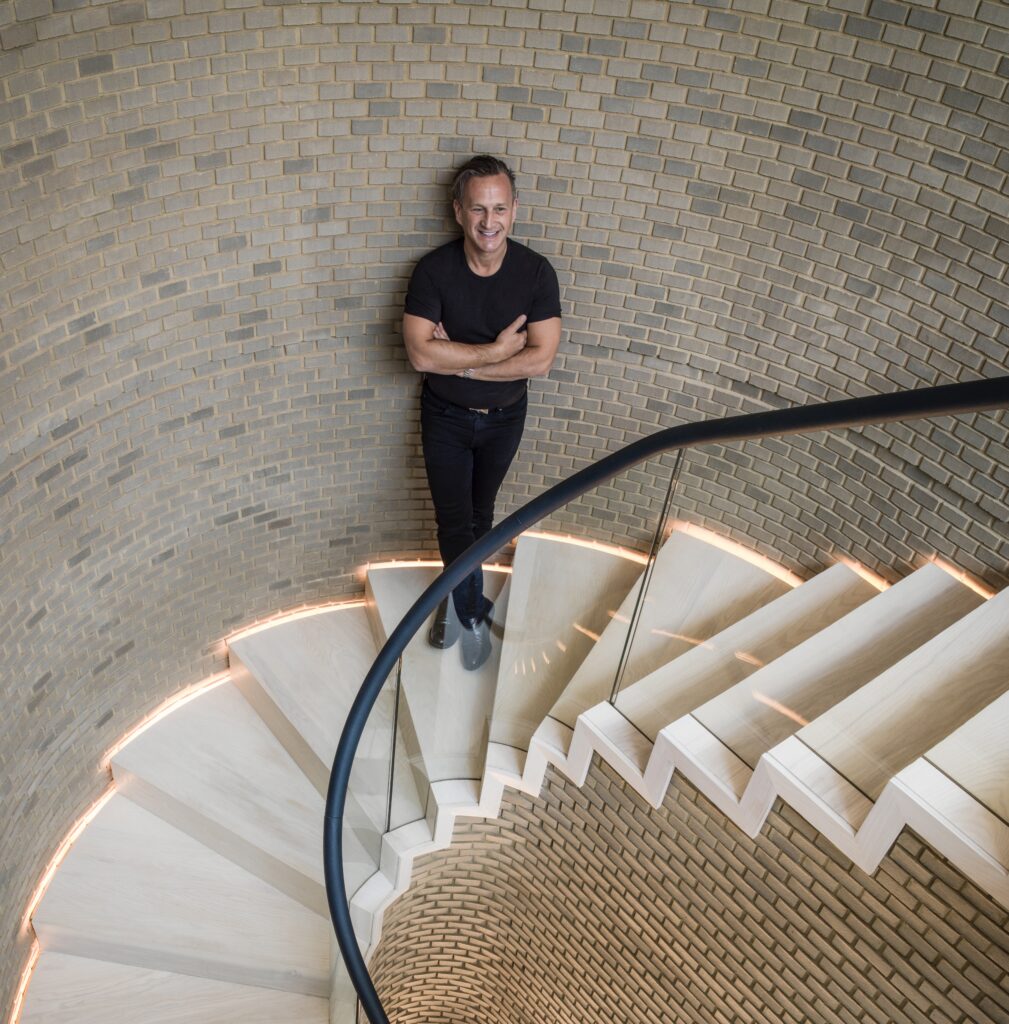
So says Gregory Phillips, who knows an awful lot about houses and homes. Phillips, a renowned and award-winning modern-luxury British architect, has built a career on understanding the needs and wants of houses and their occupants. He has imagined these structures since childhood.
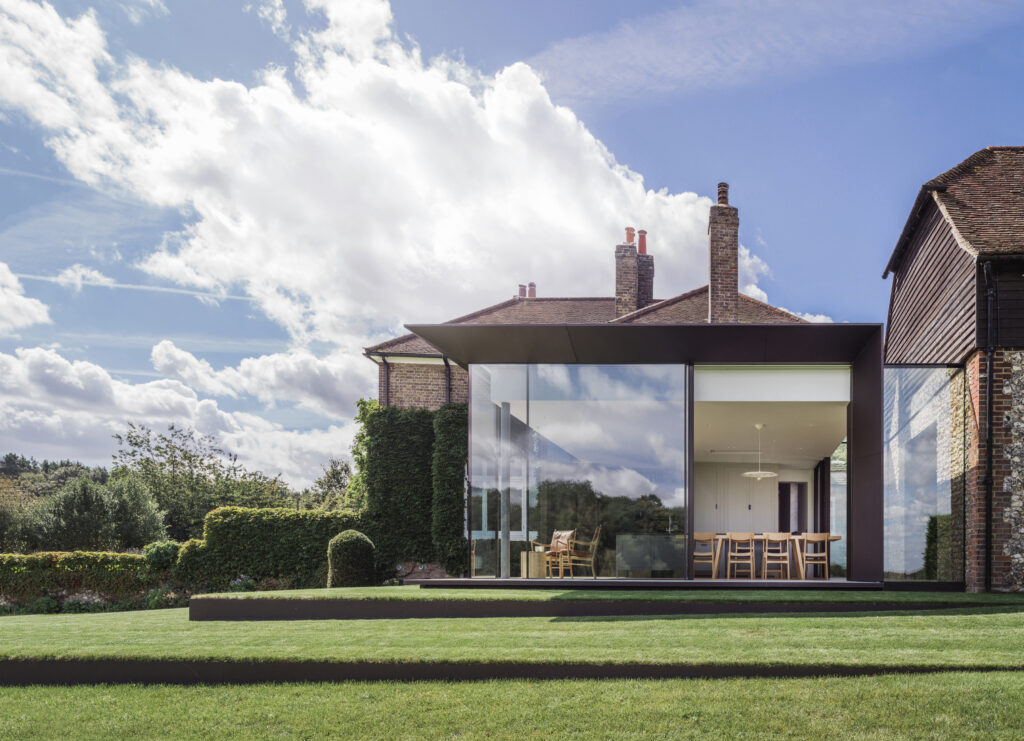
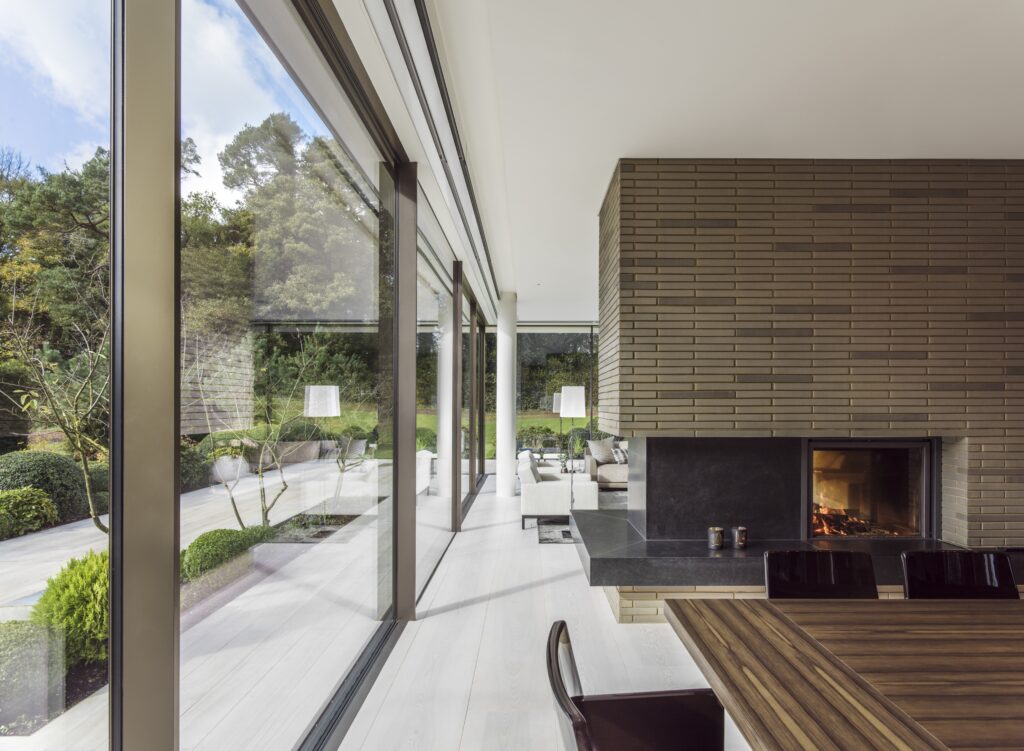
“As a boy, I just liked drawing and imagining houses,” he says. “I didn’t know how that would go. At school, I was really good at mathematics and the sciences, it wasn’t obvious that I’d become an architect. But then I went to see my headmaster when I was 18. I had two ideas of things to do. One of them was to study computing, and the other one was architecture. And he said ‘architecture,’ and I thought that sounded more interesting.”
That decision led him to architecture school, where he arrived armed with a self-made portfolio created in his spare time. Midway through his studies, something shifted. “After about a year and a half, it clicked,” he remarks. “I suddenly understood how drawing turned into three-dimensional space. It was a real eureka moment understanding the concept of space and form. And I’ve just carried on doing it ever since,”
Foundations of the man who builds the houses
Phillips’s training followed the traditional British arc of education – three years of undergraduate study, a year in practice, then two more years culminating in a master’s degree at the famed Macintosh School of Architecture in Glasgow. “That was a fantastic learning experience,” he says. “A very special place.”
He went on to work with David Chipperfield at a moment when his practice was young. “I worked for David Chipperfield Architects when they were very, kind of, an up-and-coming office. I was the guy who did the houses in the office. We had some incredible clients. I saw that a house project involves considerable design and client collaboration, and I really enjoyed that process.”
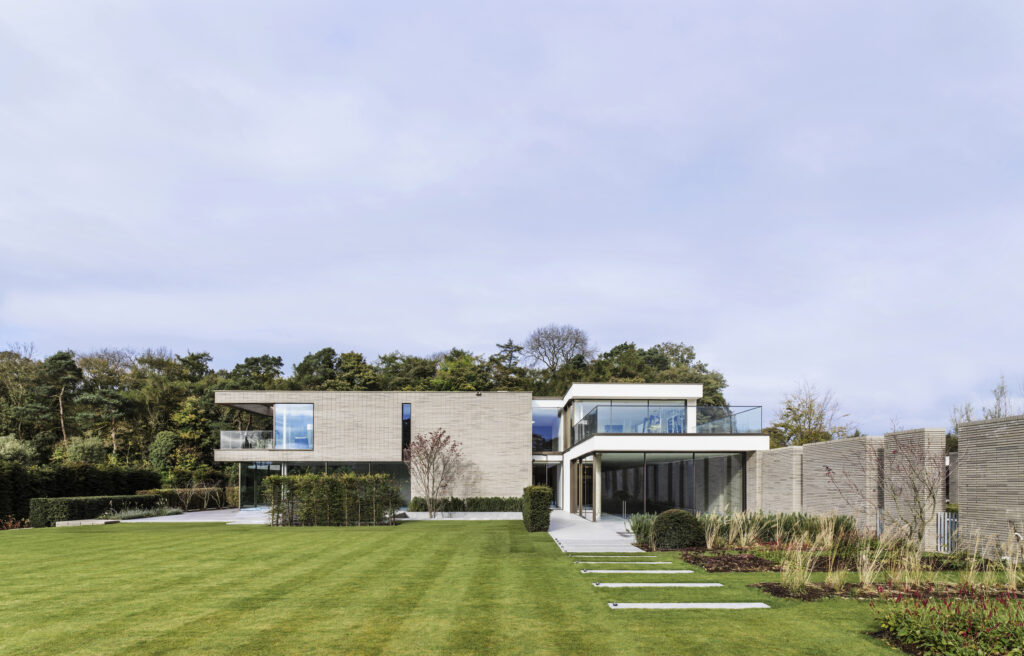
When he launched Gregory Phillips Architects at just 28, he did not expect that houses would become his life’s work. Over time, he realized his passion. “I shaped my office, that we’d specialize in luxury contemporary houses, and we’d be a bespoke office that only did that. And we’d be really good at it. I was always upset when people would claim that their architects didn’t spend enough time on details, and got things wrong, or missed things out, and I wanted to have the kind of office that absolutely did a fantastic job every time. And we aim for every job to be our best.”
This ethos has propelled Gregory Phillips Architects forward in a powerful way. Projects have gotten larger and more exciting within his niche of the design of modern houses.
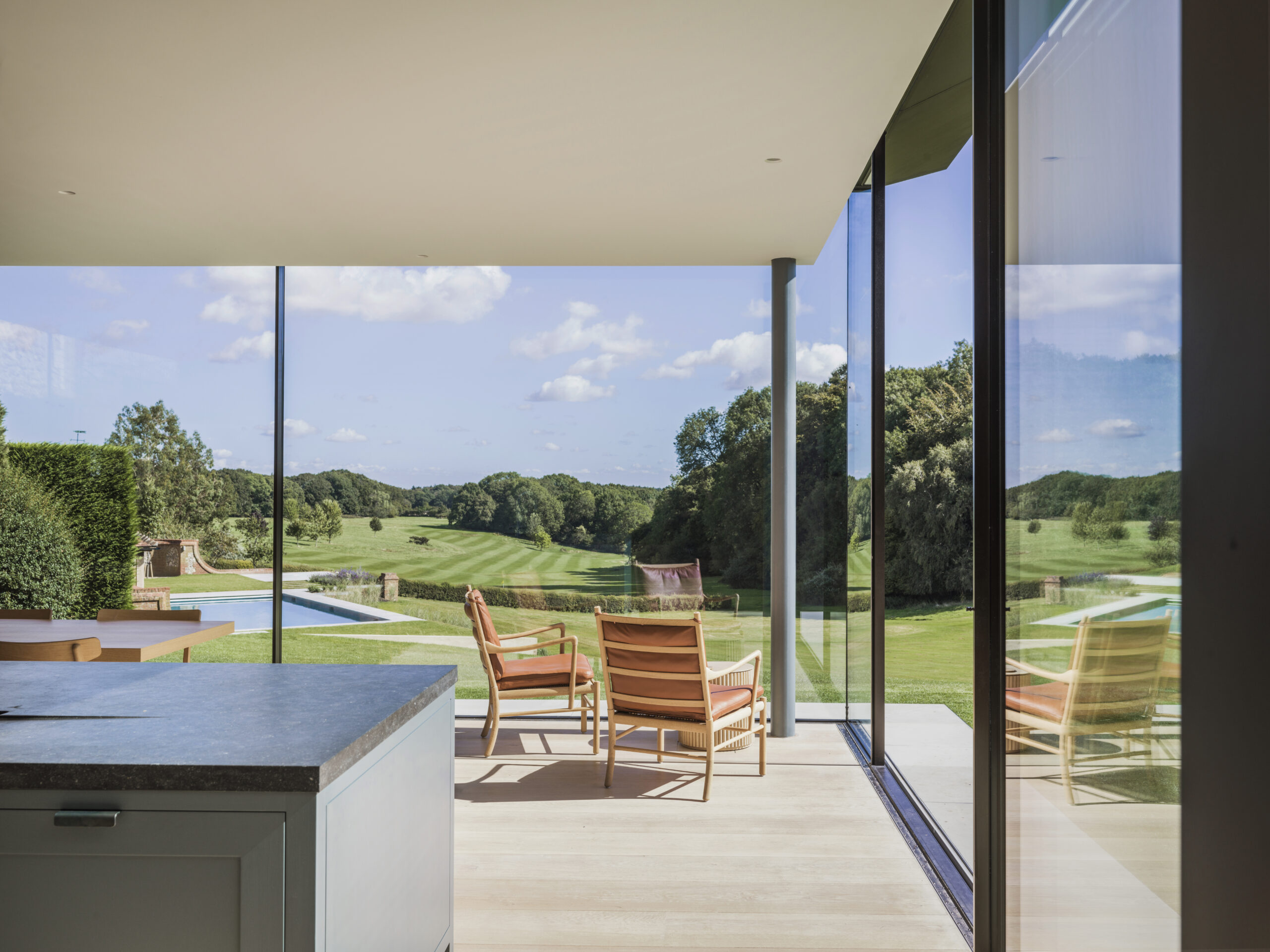
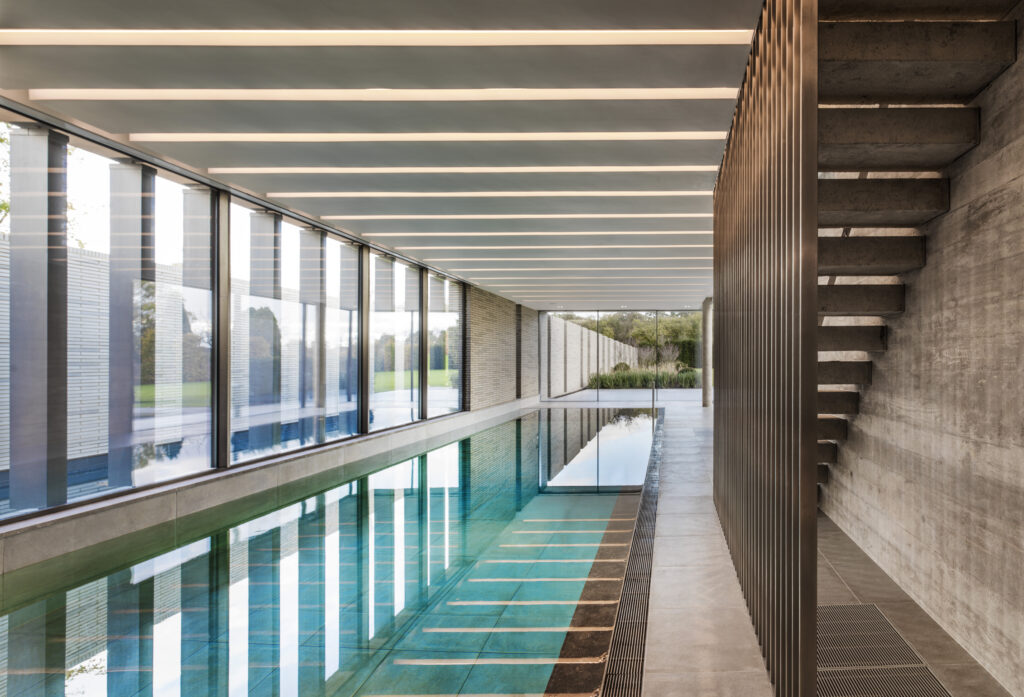
Inspiration based on logic
When Phillips speaks about design, his explanation is both precise and reflective, equal parts intuition and structure. He frames the art of design around three central points. The client’s world, the landscape and site, and his life experience.
“As I said, I come from a background of mathematics and logic, and I think design is a large part of that. We start the project with a gathering of and an understanding of the facts. There’s a lot of information from the client about all the things they want to achieve. On the functionality side of things, we bring to the conversation a lot of our past experience about what makes houses work well and what is lovely to experience.
“The second factor is where the house is located and the landscape/location. If it’s a new house, we concentrate on the situation, the context, the sunshine, the views. Again, it’s information gathering of where the best views are, what there is to appreciate, what works, what doesn’t work in that kind of environment. If it’s an old house, again, it’s what’s good about that situation. What has quality, what doesn’t have quality. It’s a kind of sensitivity to the site, to assess what it is. Those are the first two components of the jigsaw.
“The third component is our own life experiences of what works – of everything beautiful that we’ve seen.”
Threaded throughout his thoughts is also the importance of movement and perception. “I had a professor who said buildings exist to be looked at, moved through, and ordered in the mind,” he recalls. “It’s quite hybrid, I guess. There’s a component of how the journey unfolds when you travel through a space, and then what you experience in that space. There’s, again, a logic to how you put the different parts together. So, all of that is the jigsaw of puzzle pieces that we try and keep floating in the air, as long as we can, so that when we bring them down, it makes sense, and then we try things out.”
Both ancient and contemporary converge to build modern homes
All arts – and architecture and design do have a place at the arts space table – require inspiration. For Phillips, it’s the conjoinment of inspiration and common sense that leads to his success.
“Sensitivity is definitely, I guess, the inspiration, but it’s not like you look at one specific thing and that is the clue. It might be, there might be a metaphor, for example, if you’re on the edge of a landscape – on the beach, so part of you is on the sand, but then part of you is on the road, or if you’re in a landscape where there are big views – there are always conditions. I think the landscape is really important. And enjoying seeing the landscape is really important as well. But in lots of houses, in suburban situations, it’s about the front and back. What’s on the roadside, what’s on the private side? Inspiration is greatly determined by situations.”
In describing his process, Phillips notes how digital tools have reshaped his studio. “The revolution for us is that for about fifteen years we’ve started every project with a 3D digital model,” he says. “We’re designing and changing it at the same time. It’s not just a presentation tool; it’s a learning tool. Sometimes, you could look at a site, and you get an instant response to what you think can work until you start drawing and testing what you know. The revolution is in the way we work.”
He contrasts this with the early days of physical models. “Cardboard models were always a freeze frame. You’d get the design to a certain point and then cut pieces of card. But a digital model lets you evolve everything simultaneously.”
His and the British way of designing
Phillips has roots in a distinctly British sensibility. “British architecture has had a fascination with detail for a very long time,” he says. “Modern British architects are also obsessed with detail, but in a different way. Detail is really important to us.”
Working in the British architecture space, he also understands historic design and uses his ability to move that element of history into present styles. As an example, Phillips mentions courtyards, drawing on centuries-old architectural precedents in the United Kingdom. “A lot of our contemporary country houses have the courtyard as a big theme,” he says. “It goes back to Oxbridge colleges, or castles centered around an open space.”
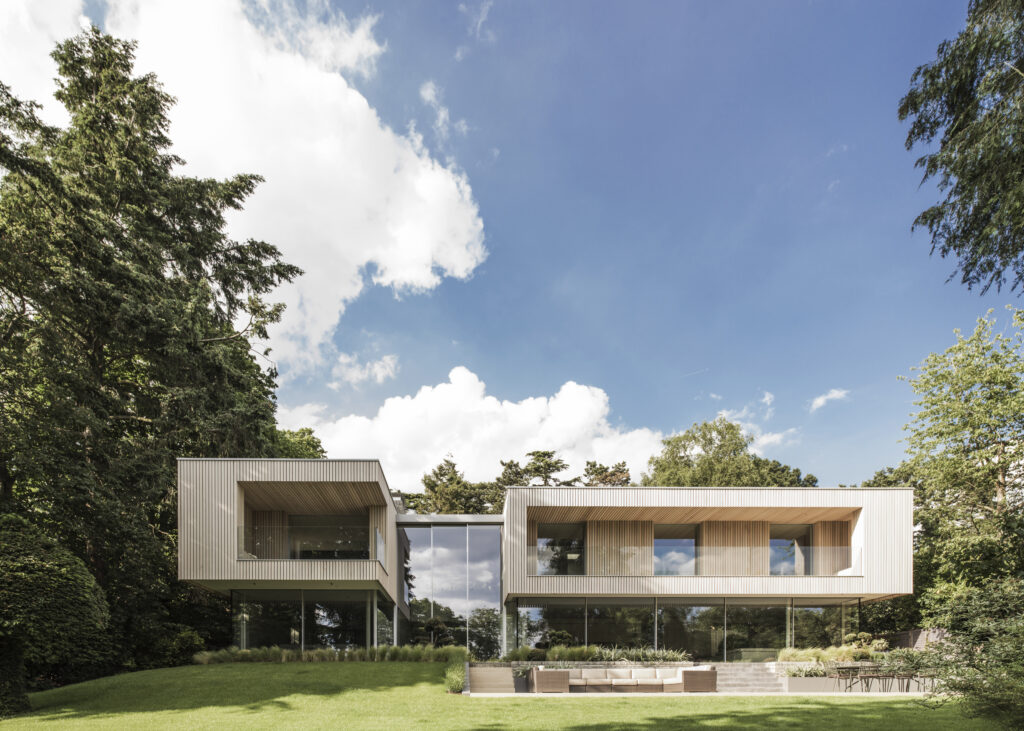
There is also the weather. The UK’s climate, which is generally mild but can be unpredictable, is a great consideration. This element sharpens Phillips’s attention to performance. “We definitely have weather,” he says. “Days where it’s too hot without air conditioning, and days with snow, rain, and wind. The issue with the sunshine is we need to stop buildings overheating, so we need shade – overhangs and coatings on glass, and being mindful to not let our buildings need too much energy to cool them.”
Working with historic structures also presents different challenges. He describes a Georgian house that he is now working on, dated to the late 1700s. “It has solid brick walls that are designed to get wet and breathe, and they work with the fact that there used to be big open fires and windows that leaked air, so that there was enough ventilation. You wouldn’t die from the fumes of the fire. It gets wetter, and it gets drier, and that’s how it works, and when you try and stop that, it fails, really. It’s not easy to make that old building work like a new building. It’s just not designed for that.”
His philosophy on the aged is pragmatic yet reverent.
“When we work on an old building, we want to conserve what is beautiful and well put together and makes sense. I’m not wedded to keeping things just because they’re old, if they’re not very good. In the UK, there are buildings and areas where the general aesthetic is protected. But I think adding a new wing in a contemporary style onto an older house is actually quite respectful of the history – it’s completely acceptable and is actually a good thing. I think, for us, who do luxury contemporary, we work with historic buildings, adding a modern aspect and bringing them up to the 21st century.”
Crossing the Atlantic
Phillips first learned of the devastating California wildfires with sadness. “I was very upset to see the images – the loss, the pain,” he says. His usual work involves larger family homes in both LA and the UK, yet he felt compelled to help.
The Case Study Design Program of the mid-20th century aimed to bring affordable, modern, replicable homes to the United States after the Second World War. LA Case Study Design 2.0 was established to bring economic climate-resilience design with the shared aims of the original program in the rebuilding of Los Angeles. Through contacts whom Phillips had known for several years, he became involved in Case Study 2.0.
“I was in LA, and for me, it was a chance to put something out there that could help. I thought if I could get involved with the rebuilding and do something good with what we offer, I’d like to.”
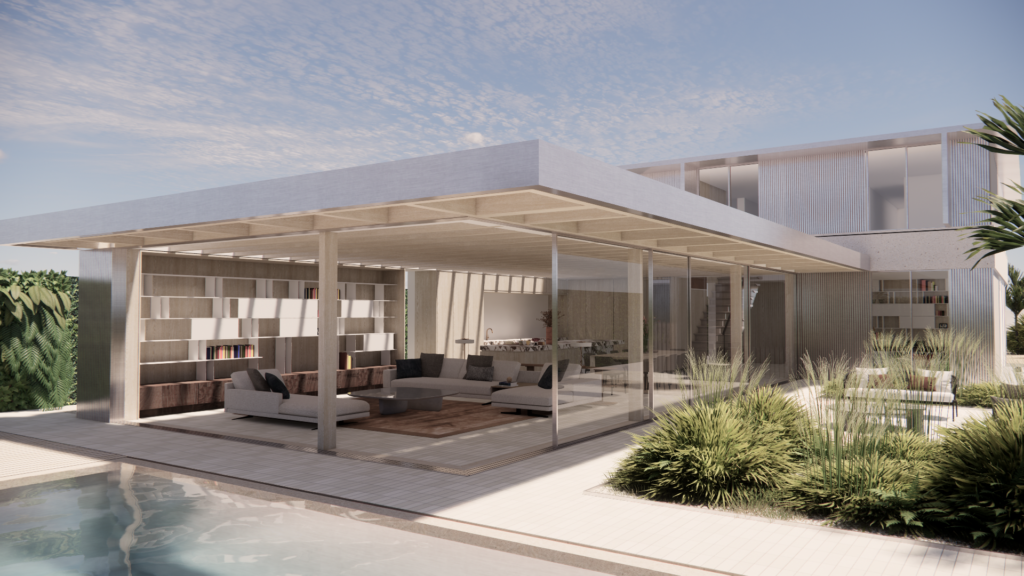
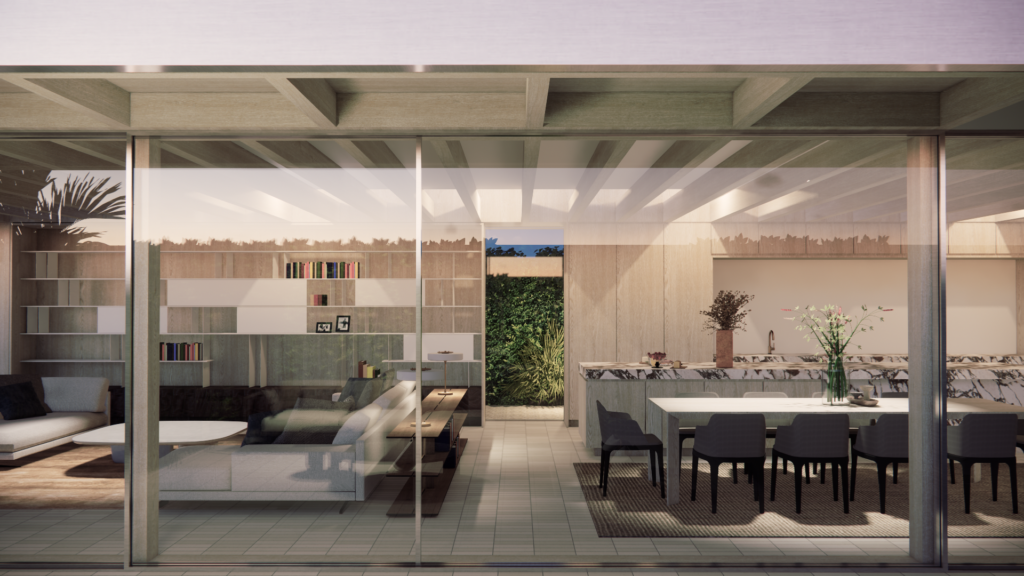
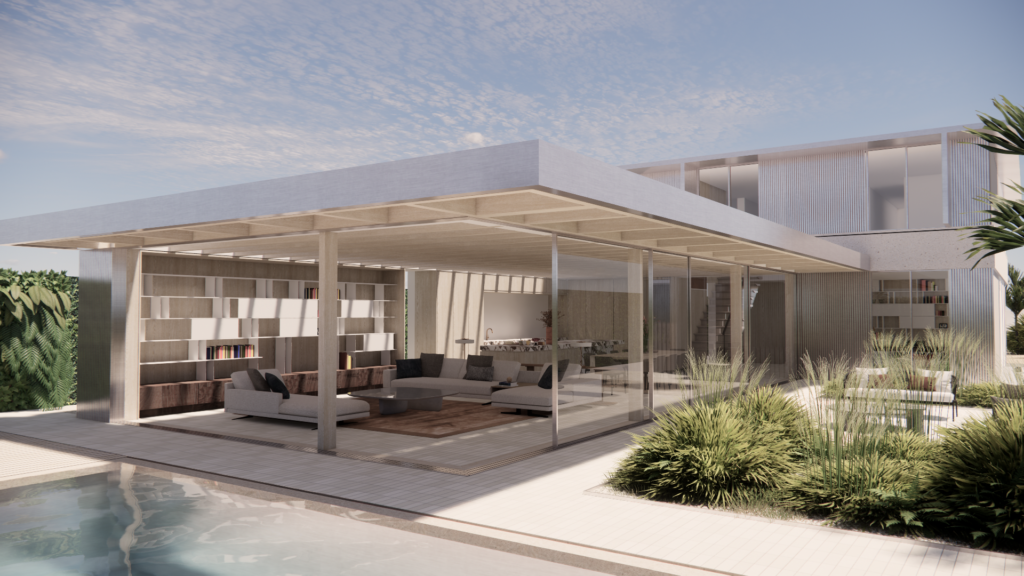
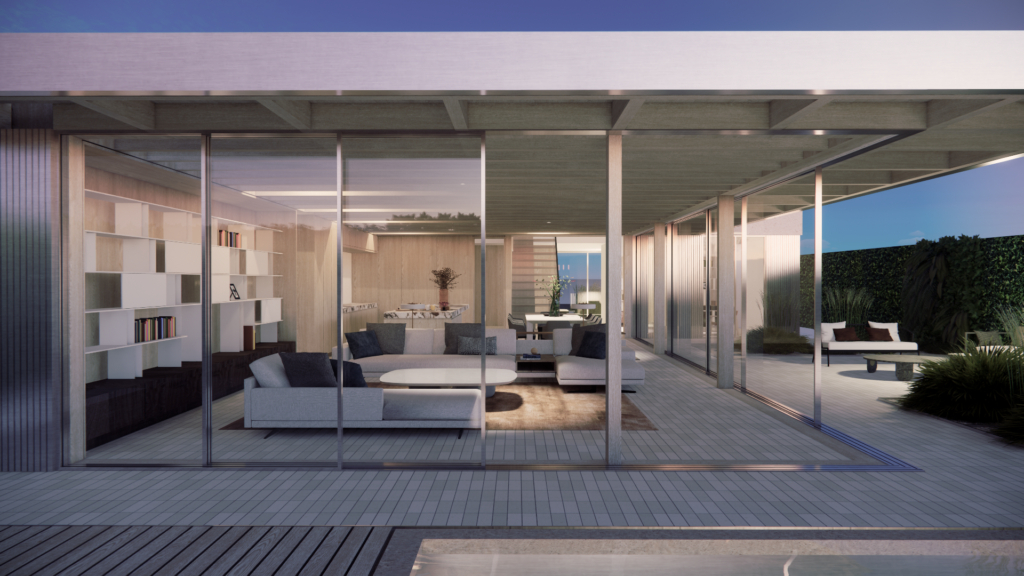
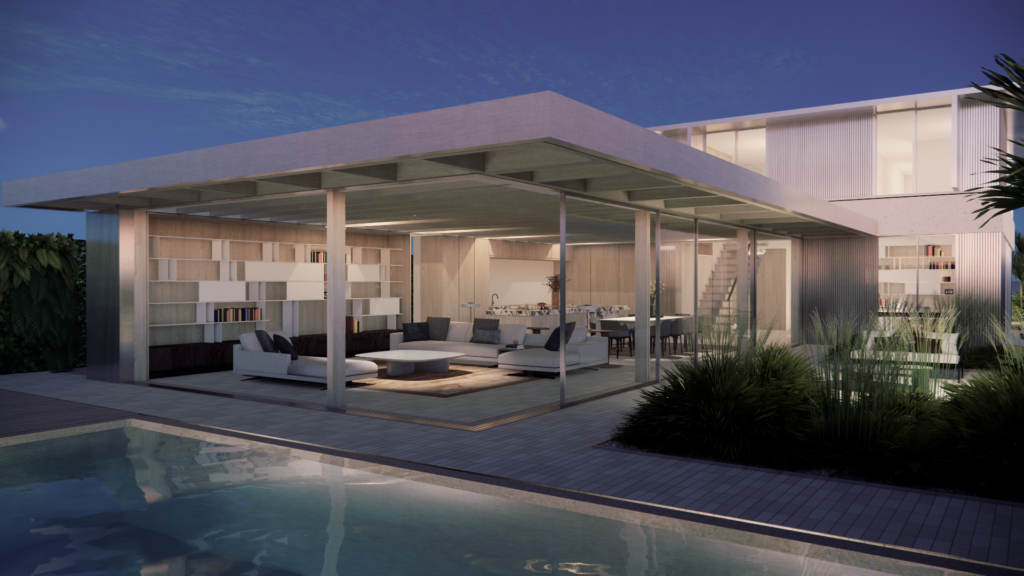
Phillips’ work on Case Study 2.0 is based on his climate-adaptive design and systems-based design thinking. As such, he designed homes for the project that are not only beautiful but also protected and fire-resistant, and able to be prefabricated or installed in modules. The homes also incorporate multi-functional open space, so loved in LA.
“I think the design worked out well – it’s got the kind of classic aspects of kitchen, dining, living, and a space that opens out onto the garden that’s really the kind of spaces that our clients love to live in. The work is universal but works exceptionally well in California – throwing open the glass to have that indoor-outdoor feeling. But we’ve also used our UK sensibility in that the main body of the house is at the front of the site in a very compact form. And so, the living space is a single story, while we left as much outdoor space – a place for a garden, a pool and as much sunshine in that rear space as possible.
“I’ve put this design out there in the world, and I hope it lands for people. I think what we did was very much in the spirit of the original case study houses that could be important in universal solutions. We’ve looked at our scheme to see if it can also be made as a prefabrication or as a modular home. And it can be.”
A Natural Fit with American Clients
Although Phillips is based in London, he is interested in expanding his work in the United States. He sees strong value in transatlantic collaboration. “I’m really keen to do more work in the US. We have a holistic sensibility, architecture, interiors, and landscape, which is unusual in the USA, although we are keen to collaborate with other designers. For US clients, we are like design consultants covering all aspects.”
Phillips notes that many of his clients in Britain have American backgrounds.
“Over the years, we have had clients, many of whom one of the partners has been American, so there’s been a lot of blended, husband and wives or partner teams here in London. I feel our work has this affinity to these clients, as it is this luxury, contemporary style. It fits very well with people who are more used to seeing contemporary houses, which pretty much happens throughout the US. So, I believe our work is a good fit with American clients, both in the UK and the US.”
Of course, Phillips’ experience in designing in the United States, as well as his accomplished work in the UK, makes him a good conduit that connects both worlds.
Focusing on the future
Asked what he sees ahead for modern design, Phillips speaks not of aesthetics but of human needs. “Houses have to be sanctuaries,” he says. “A protected place. A safe place.”
He notes the rise of multi-generational living. “People want homes where elderly parents can live with them, or where kids and grandkids can stay over,” he says. “Others want houses made for entertaining. And of course, many people work from home. A house has to do all of that.”
Through it all, he believes modern architecture enhances daily life in profound ways. “When you do it well,” says Phillips, “modern architecture gives people a different kind of lifestyle. Being with nature, being with the outside – volumes, detail … all of those things are transformational. They lead to a very enjoyable place to live.”
From the boy sketching imaginary houses to the architect shaping bespoke contemporary homes, Phillips has traveled a remarkable journey. His approach remains anchored in attentiveness – to his clients, to climate, to craft, to context, and to the daily rituals that turn a house into a life.
“We aim for every job to be our best,” he says simply.
And in that commitment, design becomes more than style. It becomes the way for how people live.
Gregory Phillips | Gregory Phillips Architects
+44 20 7724 3040