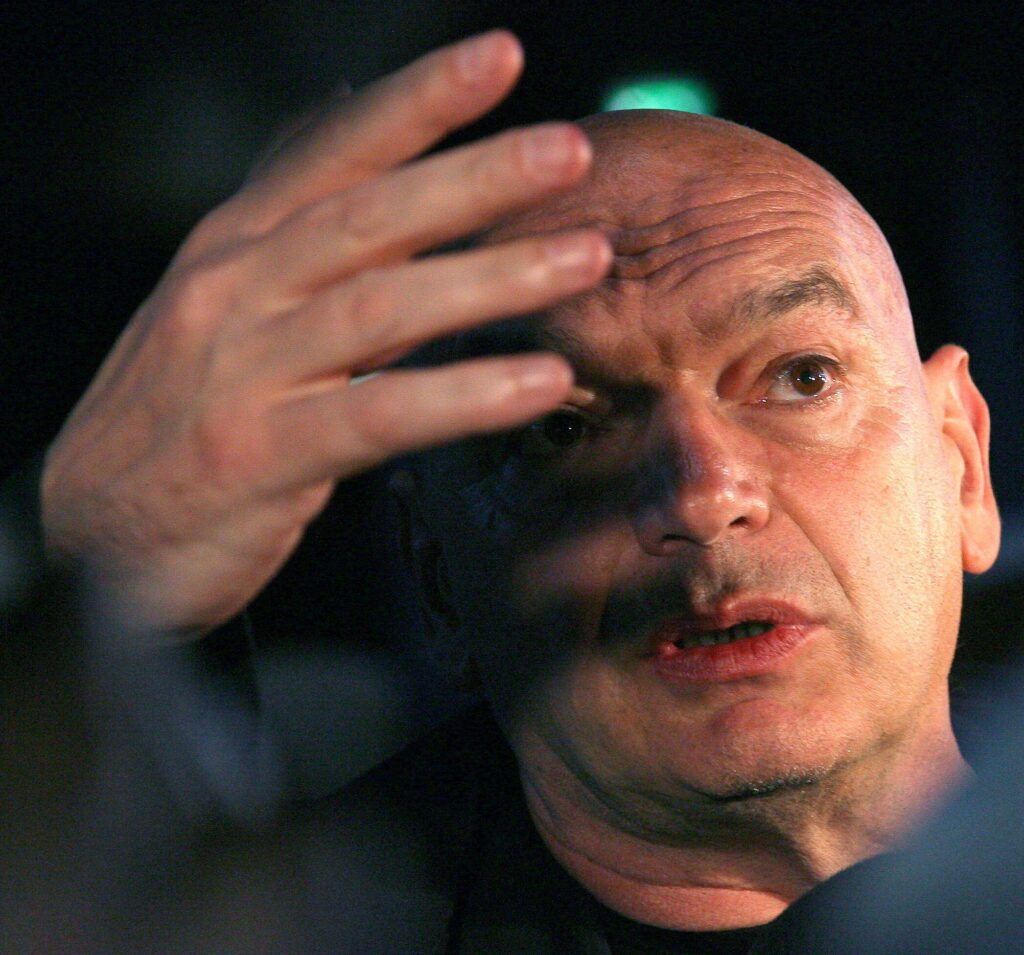
The Louvre Abu Dhabi is exquisite. It does not so much sit on the shoreline of Saadiyat Island, but seems to hover above the water, creating a low-lying constellation of white pavilions gathered beneath a vast silver dome. It’s the work of French architect Jean Nouvel, a Pritzker Prize winning designer, who brings together desert light, tidal waters, and a world-class art collection, on loan from Paris, in one unique gesture.
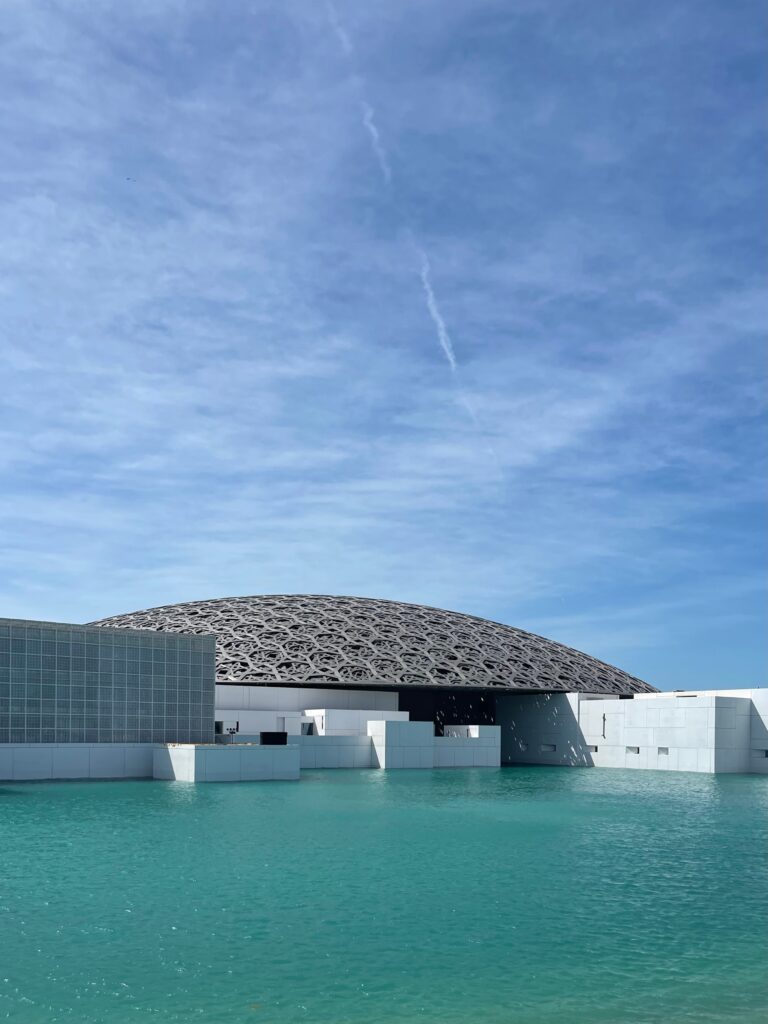
The approach to the Louvre Abu Dhabi has a cinematic feel. Stepping out of the car, a horizon of sea and sky greets you, anchored only by the pavilion forms. Very quickly, it becomes clear that this is not a single building, but a small coastal town devoted to art.
Jean Nouvel did not want a conventional isolated monument. Instead, the architect conceived a composition that recalls a historic medina, with fifty-five low-rise pavilions linked by lanes, plazas, and courtyards. Each gallery feels like its own house, and each outdoor space suggests a pocket square. Moving from one collection to the next resembles a stroll through an old quarter rather than a typical walk along a museum corridor. The result is urban and intimate at the same time, a place that invites wandering and slow discovery.
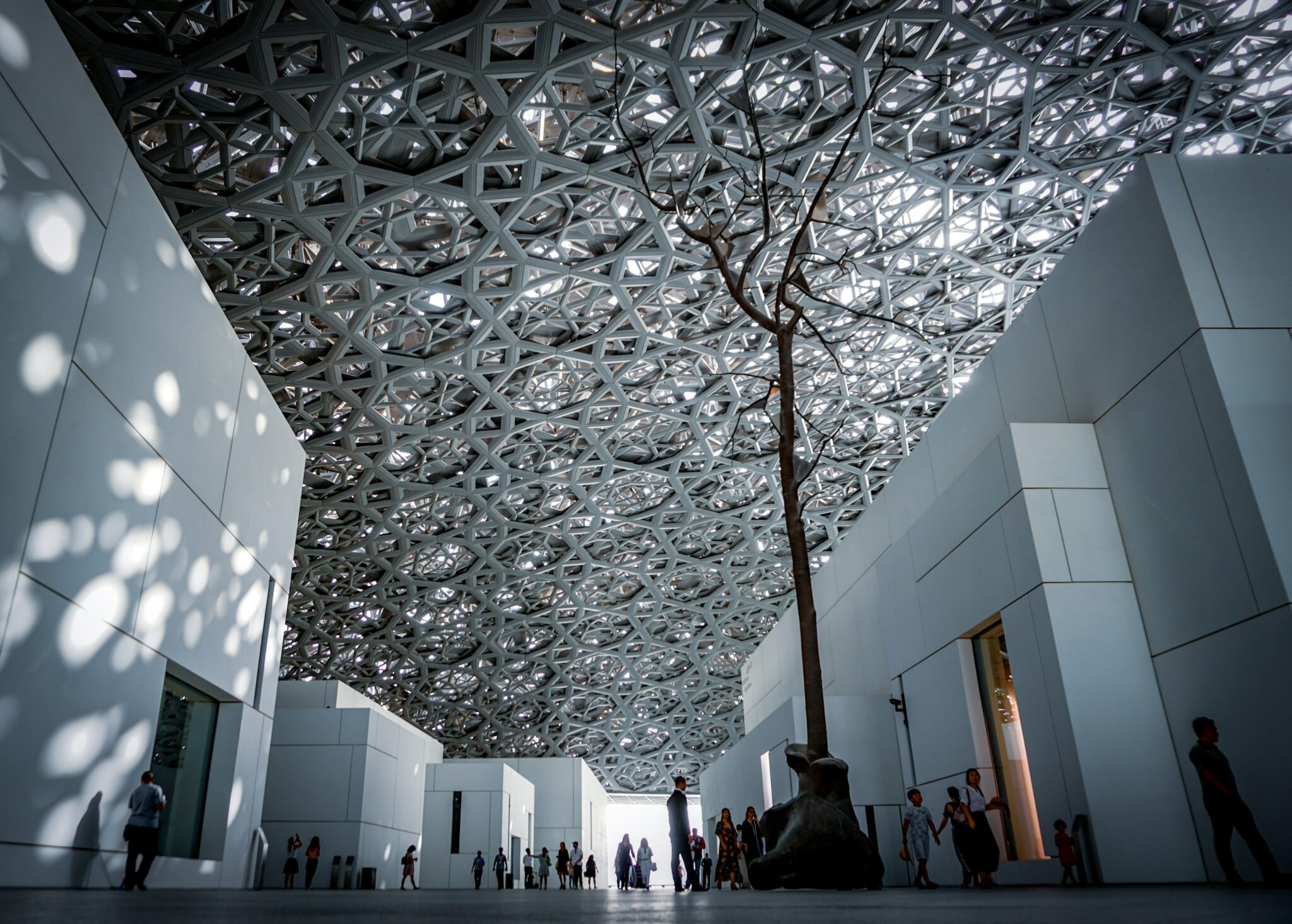
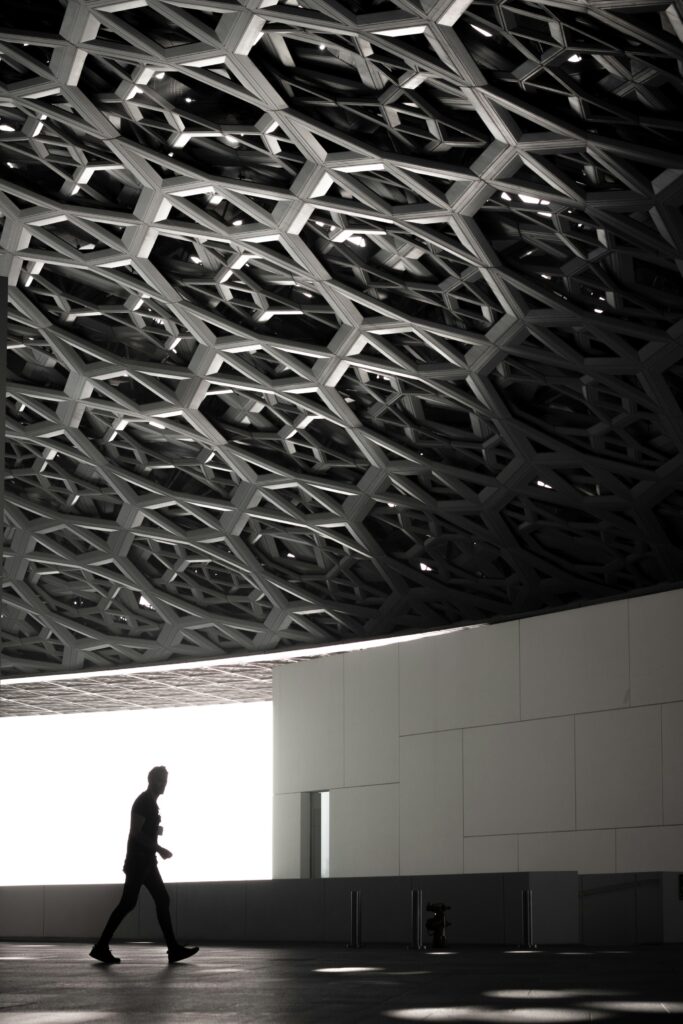
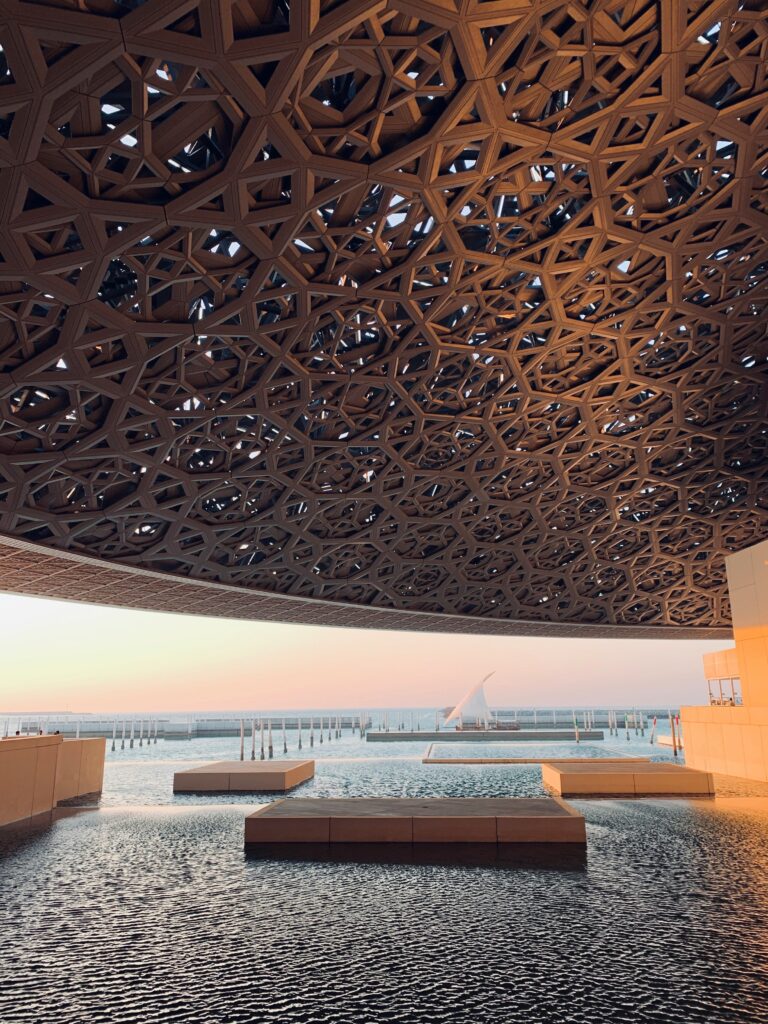
At the heart of the complex stands the dome, a disc of steel and aluminum, which is nearly 600 feet wide and appears to float above the entire museum. Nouvel’s team arranged thousands of geometric stars into a complex lattice, then stacked them in many layers, so that daylight filters through drifting shafts and points. As the sun moves, light travels across stone floors, creating the famous effect known as the rain of light. Pools emerge to create the effect of a moving constellation. The pattern recalls traditional mashrabiya screens and the shadows of palm groves, yet the overall impression is strikingly contemporary.
In the climate of Abu Dhabi, the dome serves as both an act of environmental comfort as well as a visual signature. It works like a vast parasol that lessens the intense sun and reduces glare, while still allowing a silvery, diffuse daylight to reach the outdoor spaces. Temperatures beneath its canopy feel noticeably cooler than in the city streets outside. Breezes drift through shaded passages, and the constant movement of light and shadow across white concrete creates a gentle rhythm about the place.
At the edges of the museum, Nouvel’s idea of a city on the sea becomes fully visible. Platforms and terraces step gradually toward the water, and at high tide, some appear almost surrounded by the Gulf, blurring the boundary between land and sea. Narrow channels run between buildings like contemporary versions of old irrigation canals, mirroring fragments of the dome overhead. Sit on one of the low walls at dusk, and the architecture seems to loosen, with reflections shimmering on the water and boats tracing quiet lines offshore, until the museum feels more like a modern waterfront village than a formal institution.
Inside, instead of organizing works strictly by geography or school, the galleries follow a chronological sequence of chapters that place objects from different cultures side by side. Visitors are invited to read history as a shared story of human creativity rather than a set of separate national tales. As the first universal museum in the Arab world, it carries a cultural message as strong as its architecture. Jean Nouvel’s calm, rigorous design gives each artwork space and gravity, enhancing its presence without overwhelming it.
For travelers who love design, the most rewarding time to visit is from late afternoon into sunset, when the low sun heightens the drama of the rain of light beneath the dome. Among the new icons of the Gulf, this museum city by Jean Nouvel has a rare quality. It does not shout for attention, yet it’s the building that tends to stay with visitors long after their flight home.