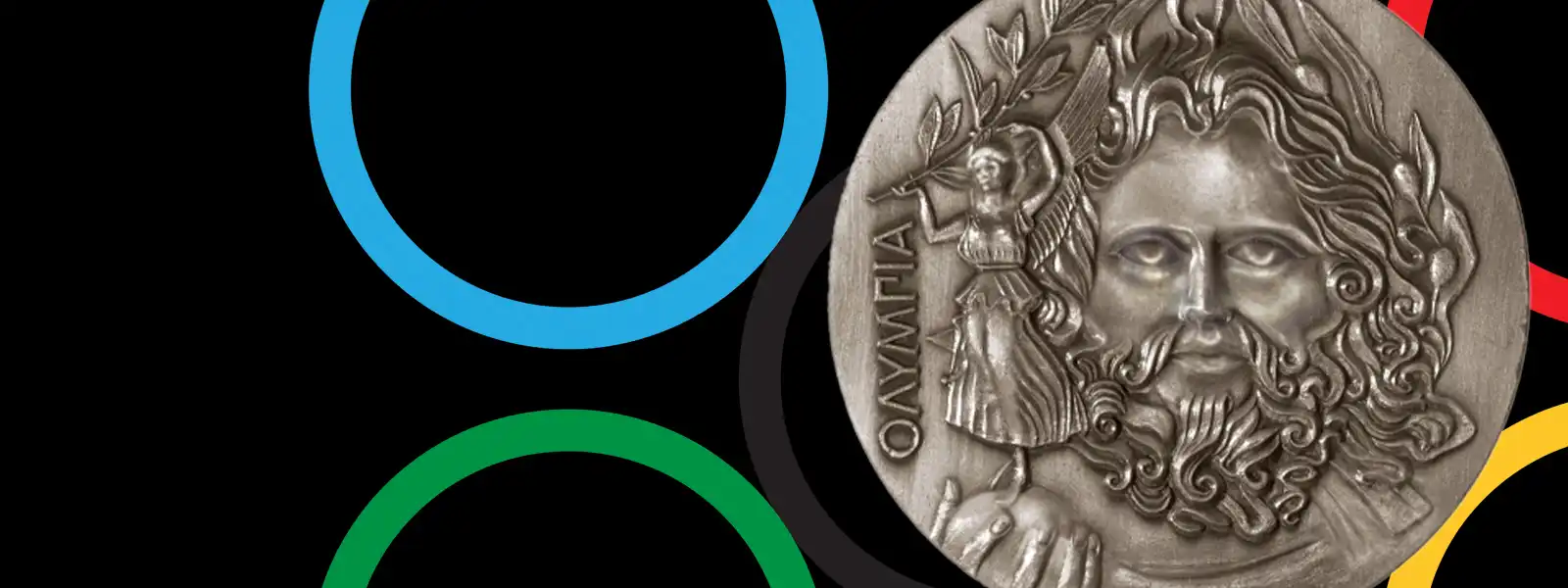
History, sports, and collection met together when a medal from the very first modern Olympic Games, held in Athens in 1896, made headlines around the globe. It was auctioned by Bruun Rasmussen Arts Auctioneers in Denmark in February of this year. With 42 international bidders vying for the piece, the hammer fell at DKK 900,000 ($142,000), and after buyer’s premiums, the final price reached $178,500. This was three to four times the pre-sale estimate. Though its precise recipient remains unconfirmed, the medal may have belonged to Viggo Jensen, Denmark’s pioneering Olympic champion, or another of the era’s trailblazers.
The small silver disc carries with it the weight of centuries and the spirit of the Olympic movement’s rebirth. Unlike today’s gold-standard podiums, first-place winners in 1896 received silver medals, second-place competitors earned bronze, and there was no award for third. The medal itself was engraved by the renowned French medalist Jules-Clément Chaplain and features Zeus holding a globe topped with Nike, the goddess of victory, with the Parthenon depicted on the reverse. Each intricate detail speaks to the classical inspiration that defined the inaugural Games.
Beyond the monetary figure, the significance of this medal lies in its story. It is one of the few surviving artifacts from a time when the modern Olympic ideals were just being shaped. In a world before broadcast rights, sponsorship deals, and record-breaking ceremonies. It’s a link to a moment when the international sporting community first gathered to celebrate excellence, fair play, and global unity. Collectors agree that such items transcend the usual auction categories.
Whether it now resides in a private collection or will eventually make its way to a museum, the 1896 Athens silver medal is proof that sometimes history itself is the ultimate collectible.