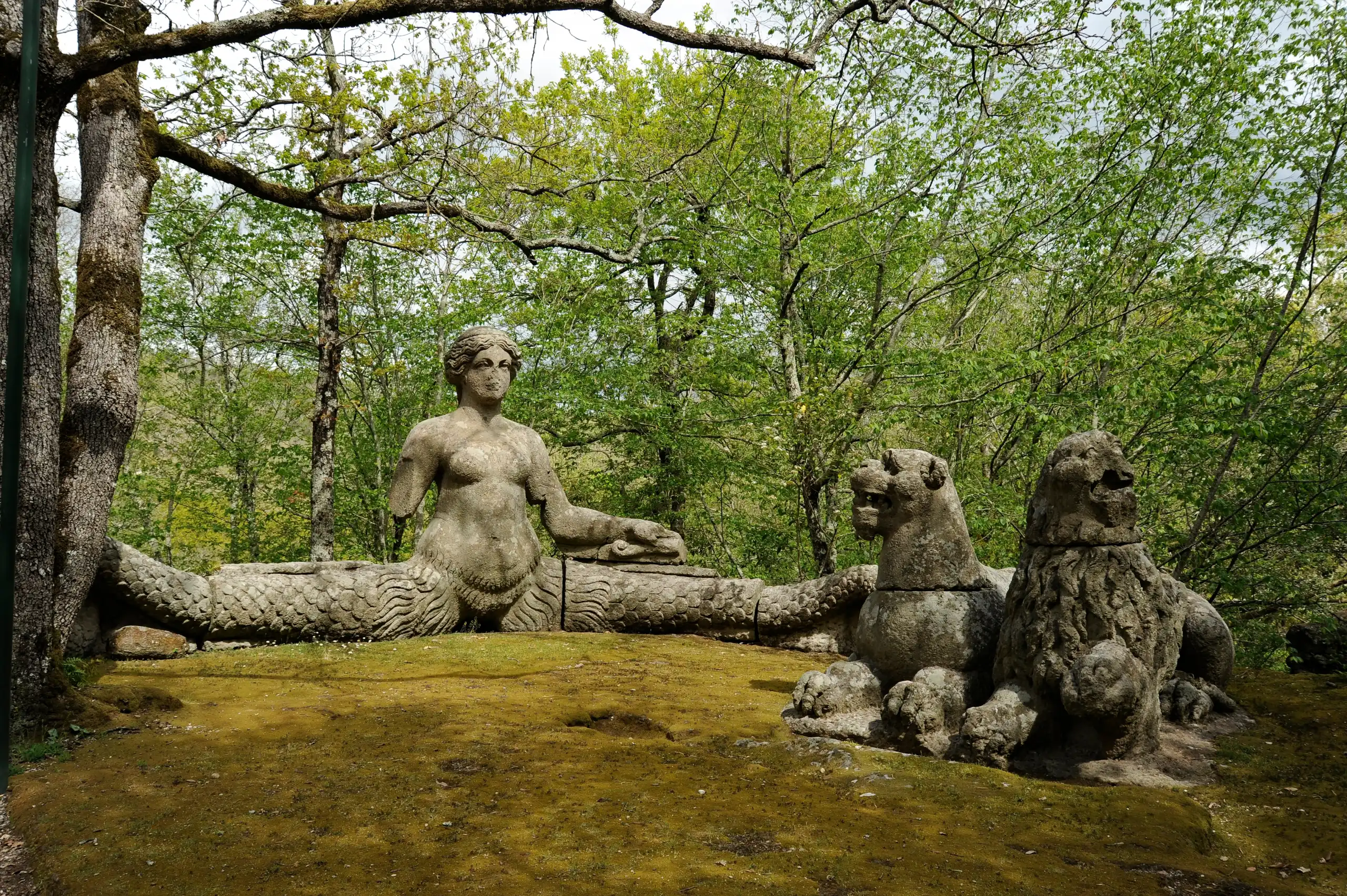
An hour north of Rome, beyond the beautiful Renaissance villas and orderly geometry of Italian gardens, there is a place that stands counter to the very idea of beauty. Hidden in a wooded hollow near the village of Bomarzo lies the Parco dei Mostri, the Park of Monsters, which is a landscape where stone giants loom, mouths gape open in silent screams, and meaning slips just out of reach. This is not a garden in which to relax. It is a garden designed to unsettle.
A Renaissance rebellion
Created in the mid-16th century, the park – also known as the Sacro Bosco, or Sacred Grove – was commissioned by Prince Pier Francesco Orsini. Unlike the grand villas of his time, which celebrated harmony, proportion, and control, his vision veered in the opposite direction. It rejected symmetry and logic and comfort.
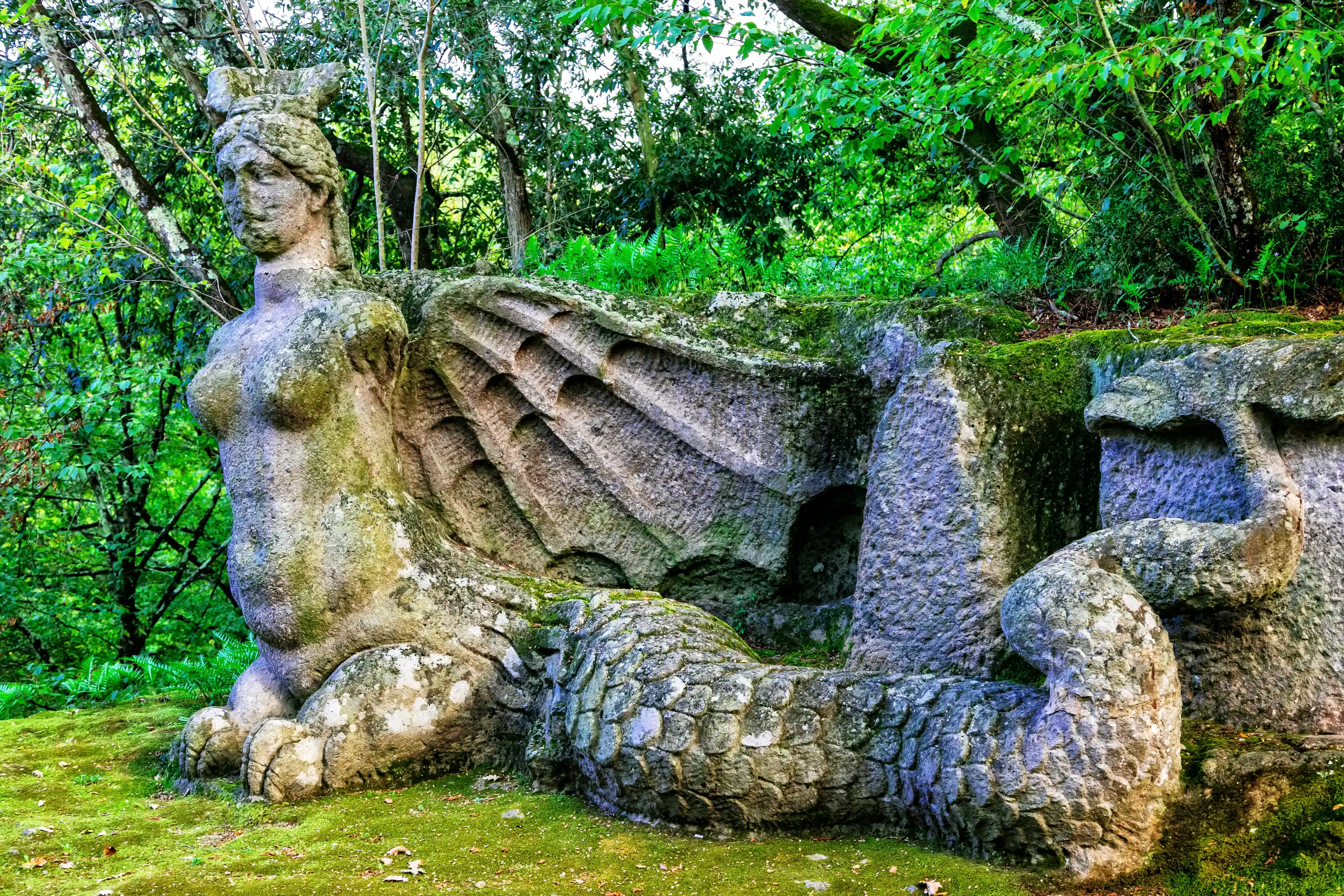
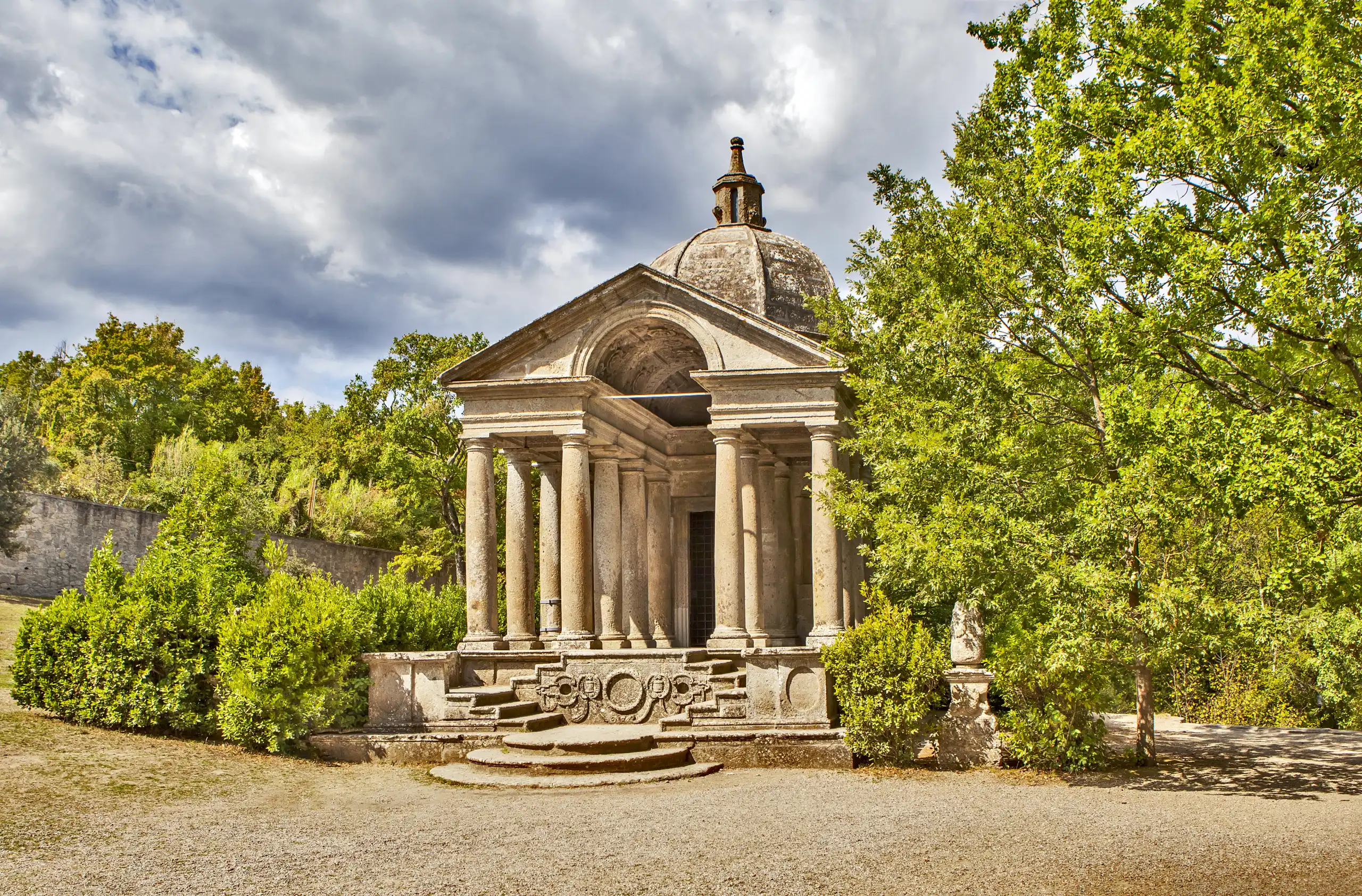
Working with architect Pirro Ligorio, Orsini filled the forest with colossal sculptures carved directly into volcanic rock. Dragons are locked in battle, elephants crush soldiers, mythological beasts, leaning houses, and enormous, disembodied faces abound. But it isn’t just the monsters found here that are unsettling. The effect is disorienting by design. Paths twist without clear direction. Scale shifts unexpectedly. Statues appear suddenly between trees, as if the forest itself had dreamed them into being. This was not a place designed for pleasure. It was meant, as one account puts it, “to startle.”
Grief carved in stone
Why did Orsini create such a disquieting garden? Behind its strangeness lies something deeply human. He built the park after the death of his wife, Giulia Farnese, and many scholars believe the entire landscape is an expression of mourning.
Unlike traditional memorials, however, Bomarzo offers no serenity, no clear narrative of loss or redemption. Instead, it feels like wandering through the interior of a troubled mind. Symbols overlap. Inscriptions confuse rather than explain. Meaning fragments into something closer to dream than logic. One carving famously reads: “Only to ease the heart.” That line may be the closest thing the park has to a key.
The theater of the uncanny
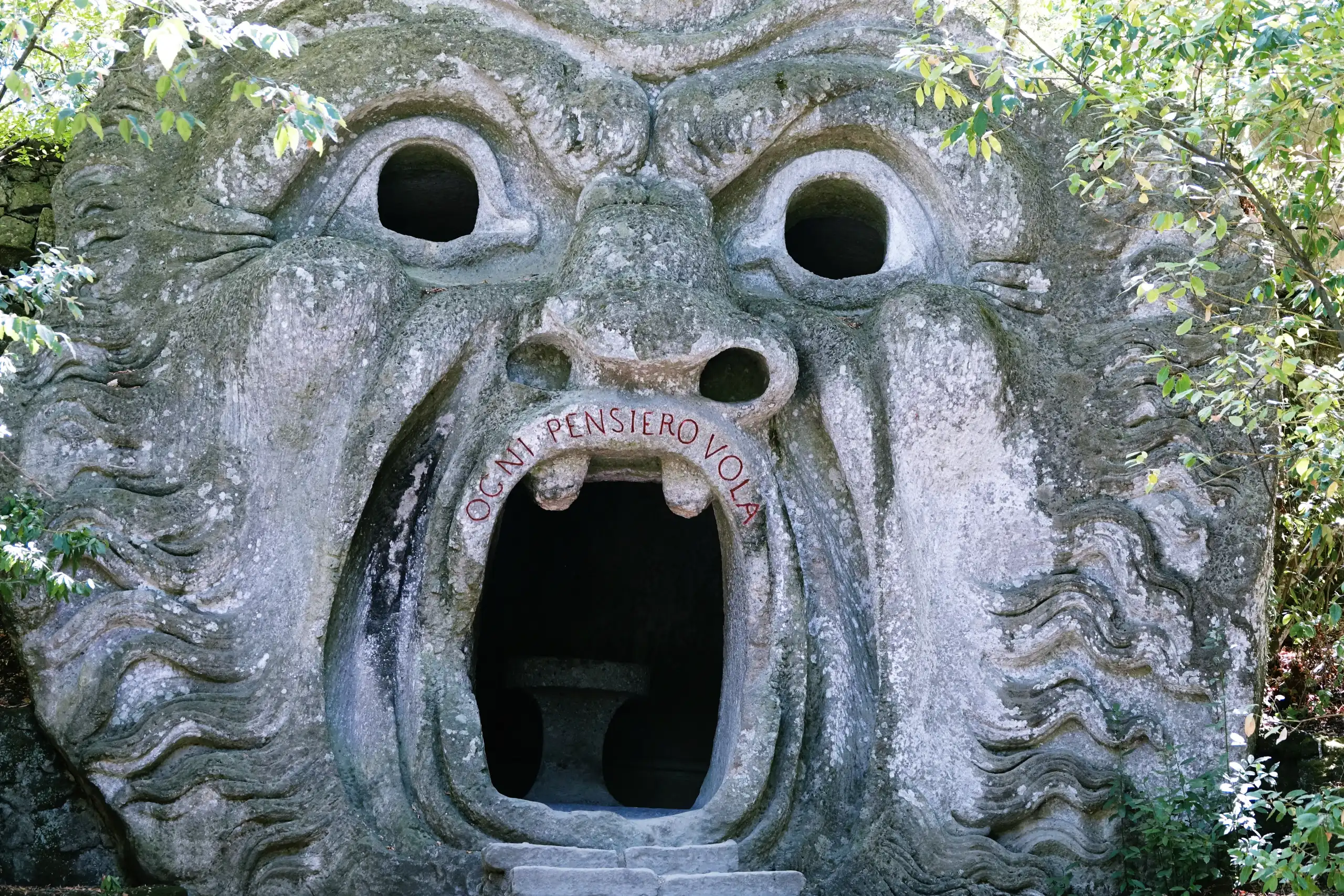
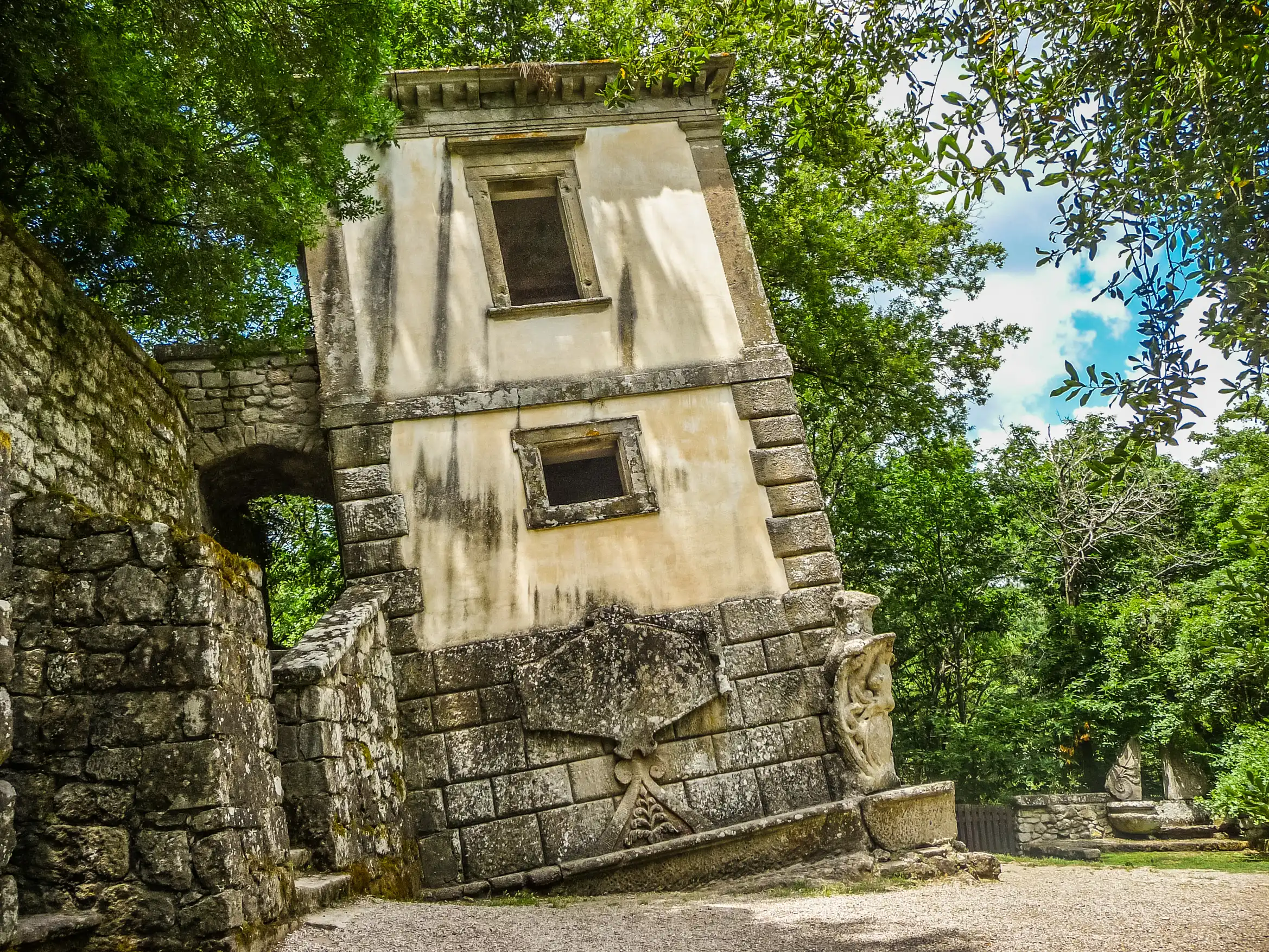
Walking through Bomarzo is less like visiting a garden and more like stepping into a surreal performance. The most iconic figure, a massive stone head known as the Orcus, invites visitors to enter its open mouth, where a small chamber lies hidden inside. Around its lips is an inscription urging those who enter to abandon thought altogether. Not far from the Orcus is a house that tilts at an impossible angle, destabilizing the sense of balance. A turtle carries a goddess on its back.
Each sculpture feels symbolic, yet no single interpretation holds. But this ambiguity is central to the park’s power. The figures draw from mythology, Renaissance literature, and possibly even alchemical traditions, but they refuse to resolve into a single story. Instead, the garden becomes a kind of psychological landscape. It is a place where imagination, fear, grief, and curiosity intermingle.
Lost, rediscovered, reimagined
After Orsini’s death, the park fell into neglect, slowly swallowed by vegetation. For centuries, it remained forgotten. It wasn’t until the 20th century that Bomarzo was rediscovered and restored, eventually becoming one of Italy’s most unusual cultural sites. Artists and thinkers were drawn to its strangeness, including Salvador Dalí, who found inspiration in its distortions. His artwork reflects the impression this strange garden left on him.
Today, the park feels oddly … modern. Its symbolism, emotional intensity, and resistance to clear interpretation align more closely with surrealism than with the Renaissance world that produced it.
A place that resists explanation
What makes Bomarzo endure is not just its bizarre sculptures, but its refusal to behave like a typical historical site. It offers no tidy narrative, no definitive meaning, no comforting sense of resolution. Instead, it asks something rare of its visitors – to experience without fully understanding. In a cultural landscape often obsessed with clarity and explanation, the Sacro Bosco remains deliberately opaque. It’s a place where confusion is part of the design, and where beauty is inseparable from unease.