In Morocco, luxury is not defined by excess. Rather, it is defined by contrast. It’s a place where the austerity of the desert meets handcrafted opulence. The Sahara, especially near Erg Chebbi,is a wonderland of sand. Vast dunes have been shaped by wind into sculptural ridges of dramatic color. In contrast, in Marrakech, particularly within the hidden courtyards of the medina, silk becomes a marker of indulgence.
Sand
One travels to the Saraha to trek across a spectacular landscape. The journey to the trek’s starting point is unique in itself. Luxury desert circuits often include private helicopter transfers over the Atlas Mountains, revealing a shifting palette of valleys and snow-tipped peaks before descending into palm groves and villages. For those arriving by road, the experience is more Bedouin. Guests are chauffeured, not on camels but in 4x4s, with stops at artisan cooperatives along the route to their desert camp. At these cooperatives, they observe weaving, dyeing, and embroidery techniques that supply some of Morocco’s most exclusive fashion houses and interior designers.
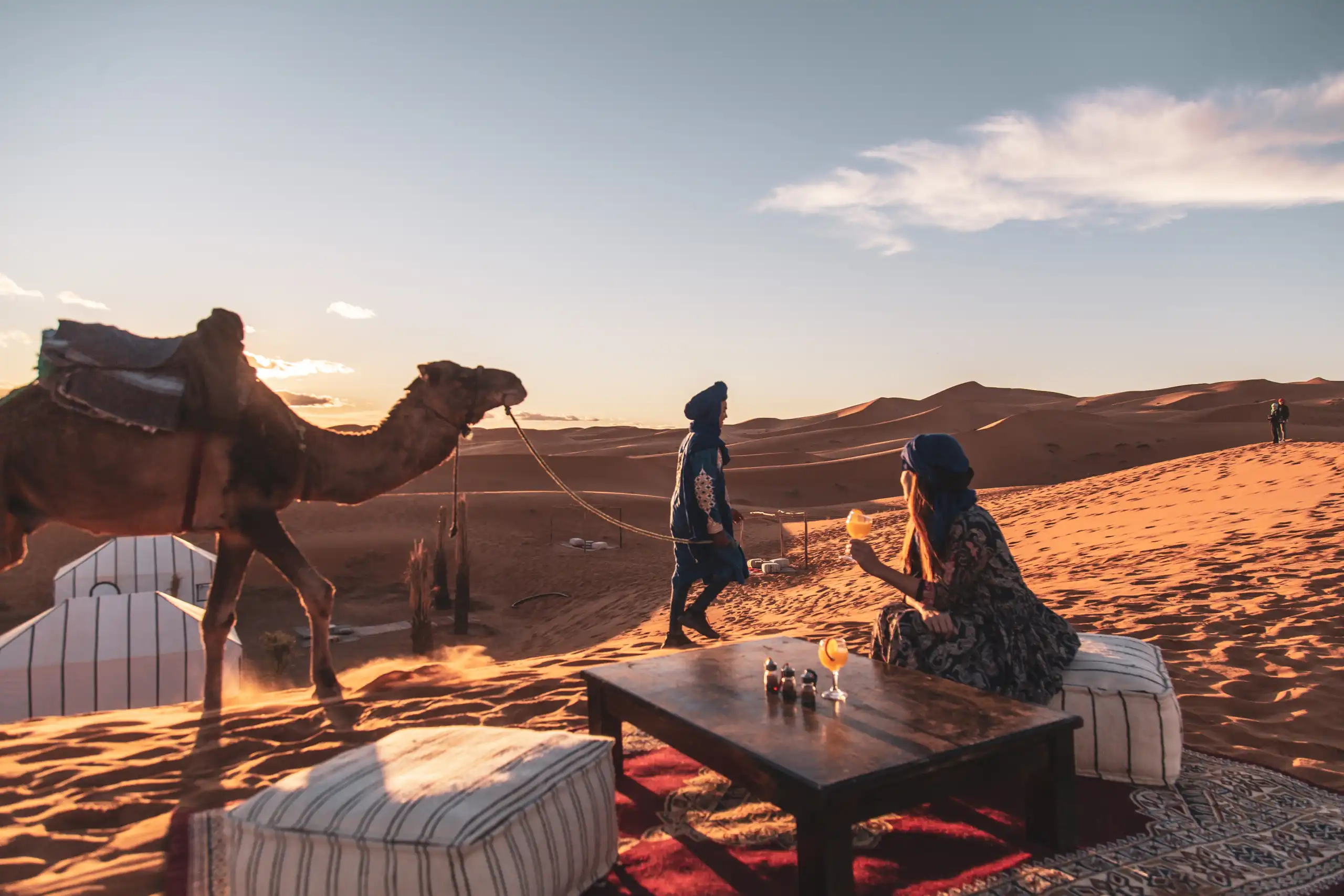

Once arriving at camp, guests find themselves in a sumptuoussetting. Handwoven Berber rugs are layered over sand and low-burning lanterns cast atmospheric light. But upon reaching their tent, many are taken aback by its outfitted hand-carved wooden furniture, linen drapery, and copper basins filled with rose water. This is not typical off-grid camping; this is indulgence in the desert.
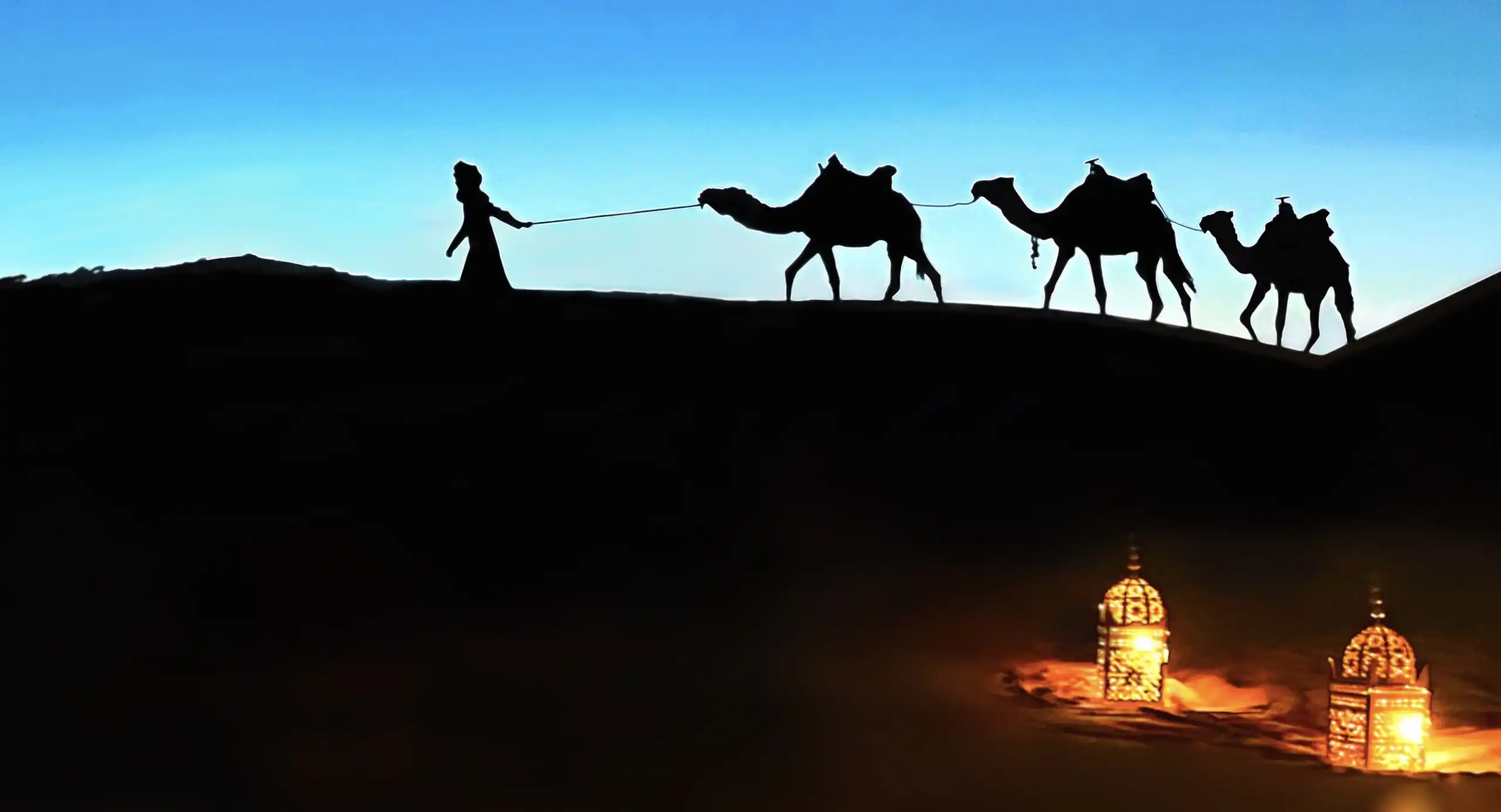
Camel treks here are not treated as excursions but as acts of artistic composition. The routes are unhurried and designed less around distance and more around atmosphere. Riders move in single file across hard-packed plains and high ridges. It is hushed with guides allowing their visitors to appreciate the solemnity of the desert.
The ascents toward the dunes begin late in the afternoon, timed precisely for when the heat begins to fade and the desert starts to change color. These climbs are intentionally reserved for sunset alone. As the caravan rises along the dunes, shadows lengthen into deep troughs. The sand reflects tones of copper, rose gold, amber, and violet. The desert is presented not as spectacle but as something quietly vast.
After sunset, the group descends toward a temporary dining camp. The dinners themselves are unexpectedly elaborate, given the isolation. A menu might include layered tagines scented with saffron and preserved lemon, charcoal-grilled meats, warm flatbreads baked in the sand, slow-cooked vegetables, dates, mint tea, and pastries finished with orange blossom or honey. Courses arrive gradually over several hours rather than all at once. And music is handled with a sense of quietness, too. Traditional Gnawa musicians often perform from the edge of the camp rather than its center. The metallic castanets and low pulse of the guembri create an atmosphere that is not one of entertainment. It is meant to enhance the experience itself.
Silk
Cities like Marrakech define luxury travel by privacy, craftsmanship, and atmosphere. In riads within the historic Medina, heavy wooden doors open into quiet interior courtyards with reflecting pools, citrus trees, and walls finished in smooth tadelakt, a traditional Moroccan waterproof lime plaster, which reflects light. The transition from the busy streets outside to these enclosed spaces is immediate.
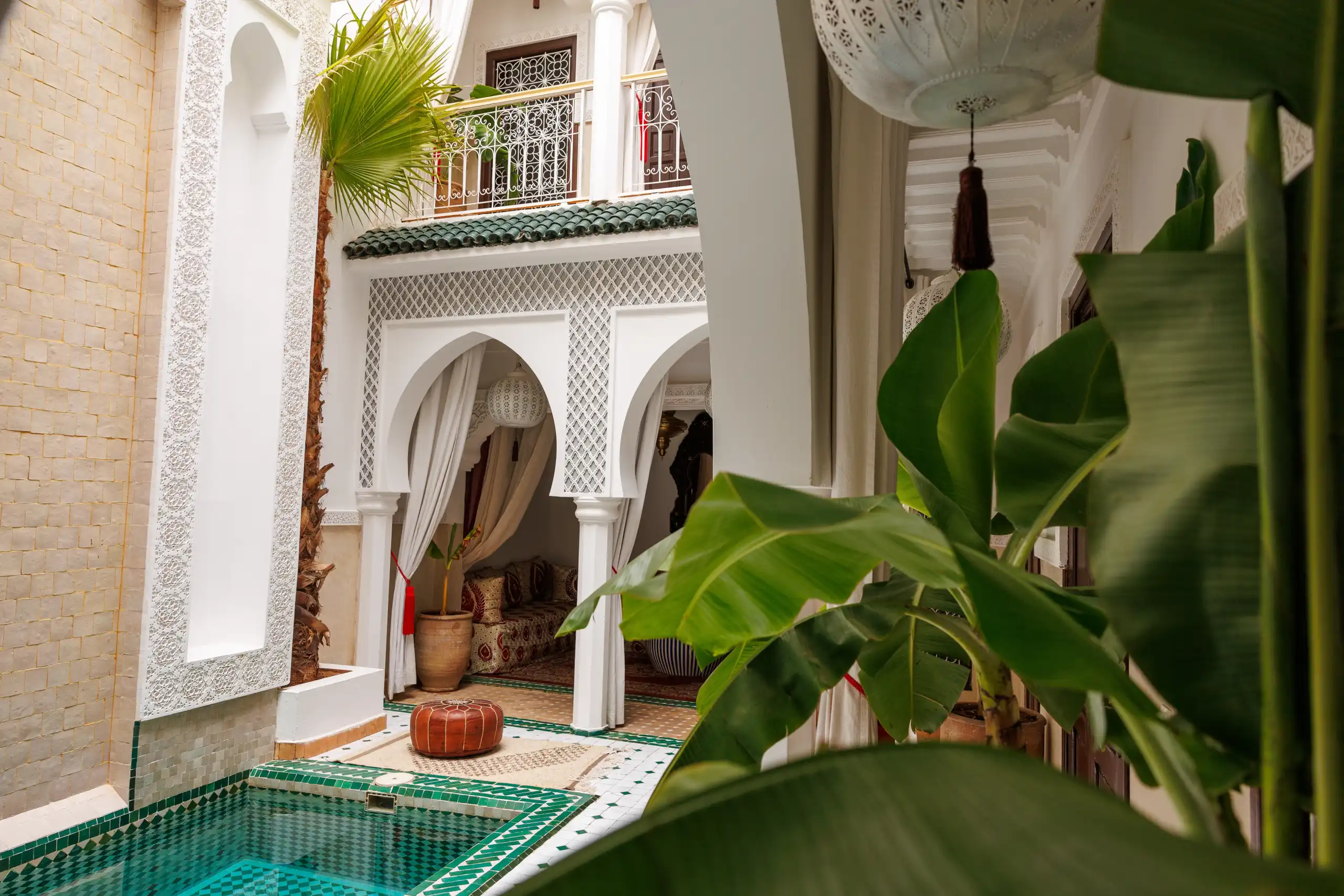
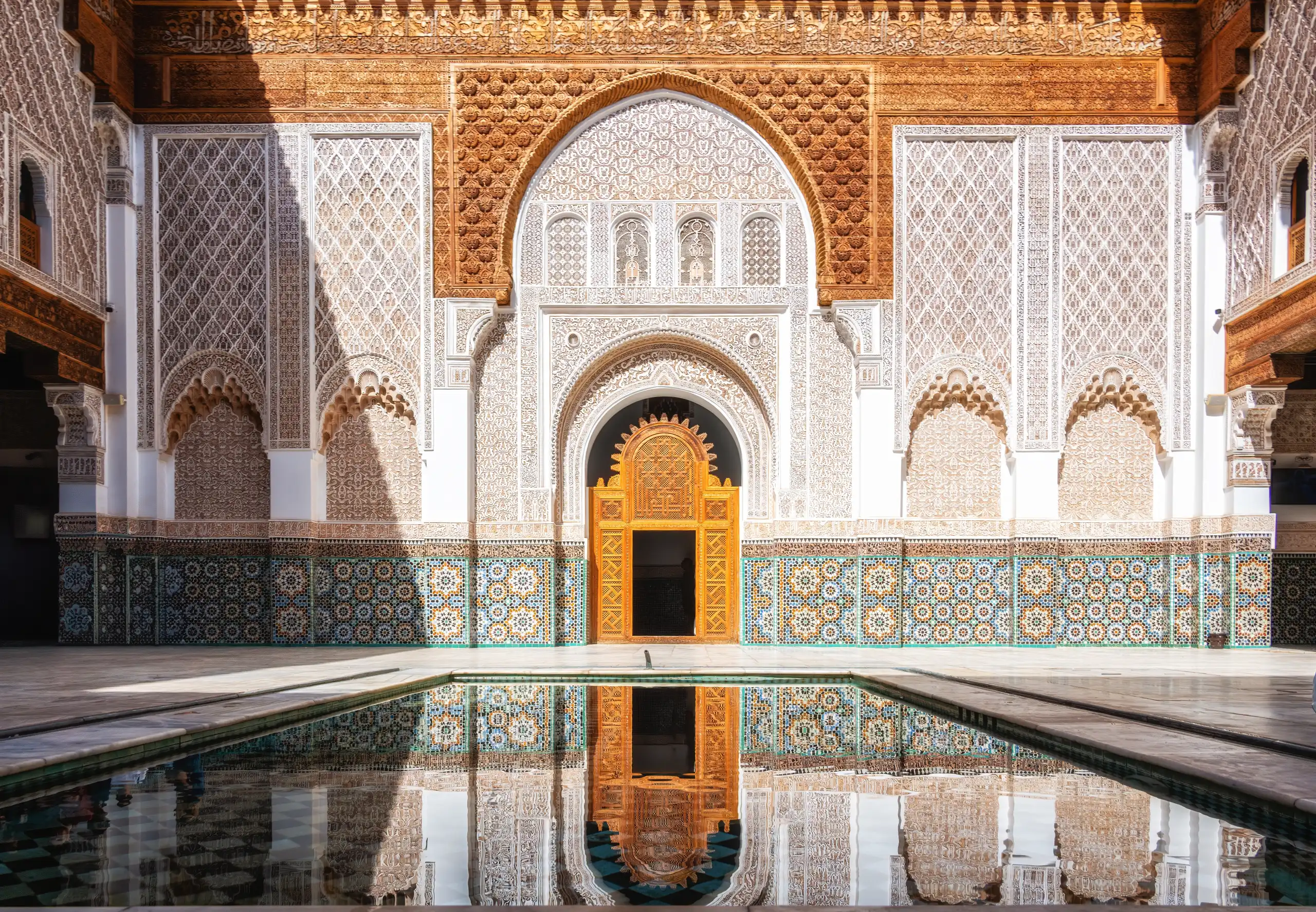
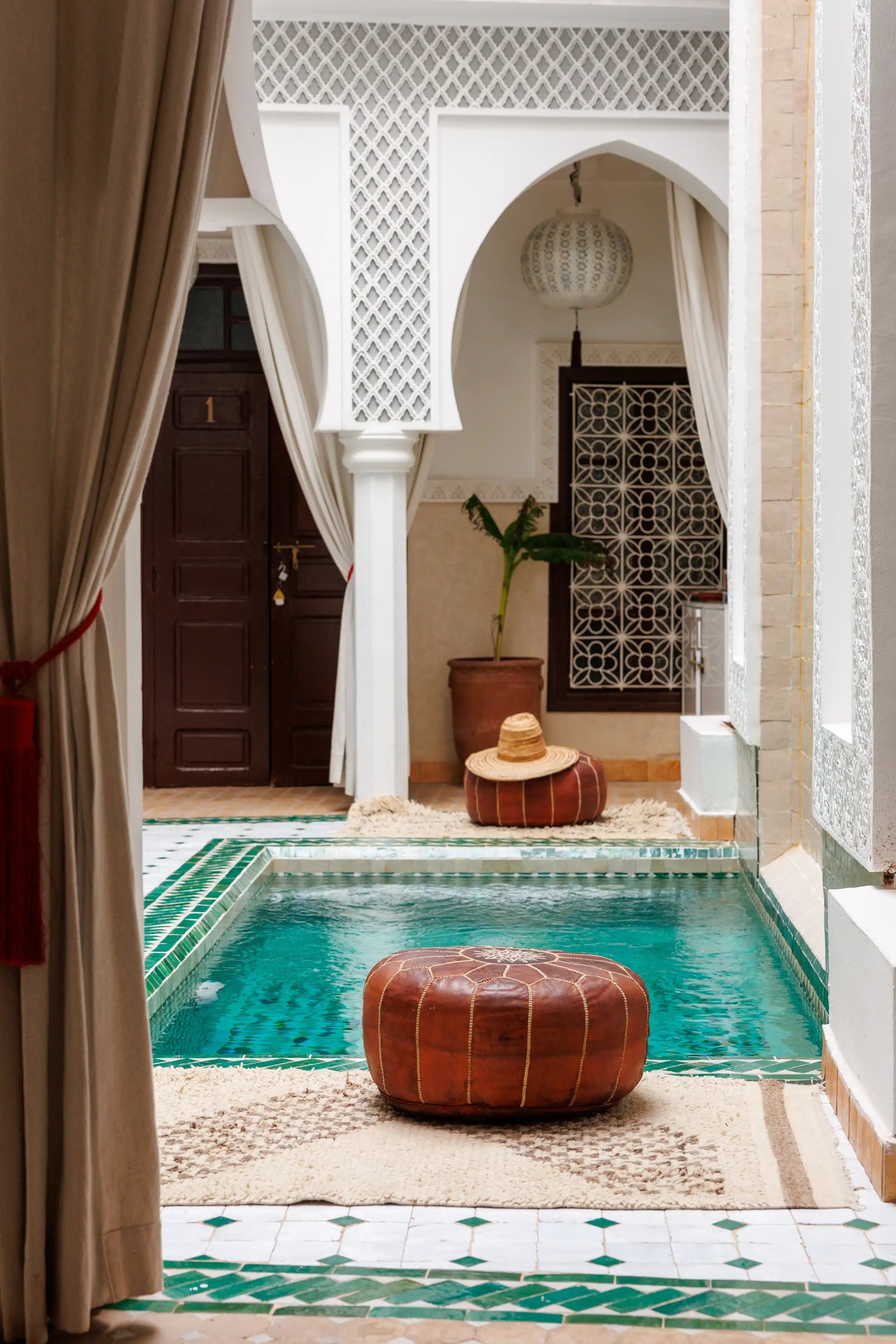
For luxury travelers, the appeal lies in this complete separation. Many riads operate more like private residences than hotels, with only a handful of suites, dedicated staff, and interiors designed around comfort rather than display. Silk is used throughout these spaces to soften the architecture. It’s draped over arched doorways, layered across low seating areas, and incorporated into canopy beds. Silk cushions, wall panels, and lightweight curtains add texture without overwhelming the rooms.
The sensory details are carefully managed. Courtyards are lightly scented with orange blossom and cedarwood, while saffron tea is often served during private check-ins or evening gatherings on rooftop terraces. Lighting remains low after sunset, with lanterns and candles reflecting against tile and plaster surfaces rather than bright overhead fixtures.
Suites often include marble baths, private hammam spaces, and dressing areas stocked with handwoven robes and silk slippers. Dining is similarly intimate, with meals served in courtyards or private salons instead of formal restaurants. Tables are typically set with linen, polished silver, and simple floral arrangements, while menus focus on refined versions of traditional Moroccan dishes paired with contemporary service standards.
Luxury travelers move through Marrakech, engaging in curated shopping appointments with local artisans and hammam treatments that combine traditional rituals with contemporary spa design. Days are often structured around private experiences. These visitors to the city sign up for guided walks through the souks before opening hours and intimate dinners oncandlelit rooftops or evenings listening to live Gnawa music in secluded garden settings. They also leave the city to enjoy private hot-air balloon flights at sunrise, followed by breakfast in the desert, or spend the day at remote kasbahs or Berber villages with private guides and chefs.
Many riads arrange after-hours access to gardens, palaces, and artisan workshops, allowing travelers to meet ceramicists, textile makers, and jewelers in quieter, more controlled settings. Fashion-focused visitors often book private caftan fittings and custom silk embroidery appointments with local ateliers, while food-centered itineraries may include chef-led market tours, wine tastings, or multi-course dinners staged inside historic residences not normally open to the public.
High-end travel across Morocco increasingly bridges both sand and silk with seamless precision. Sand and silk will remain the poles of a Moroccan experience. Together, they define a Morocco soaked in luxurious, fantastical experiences.