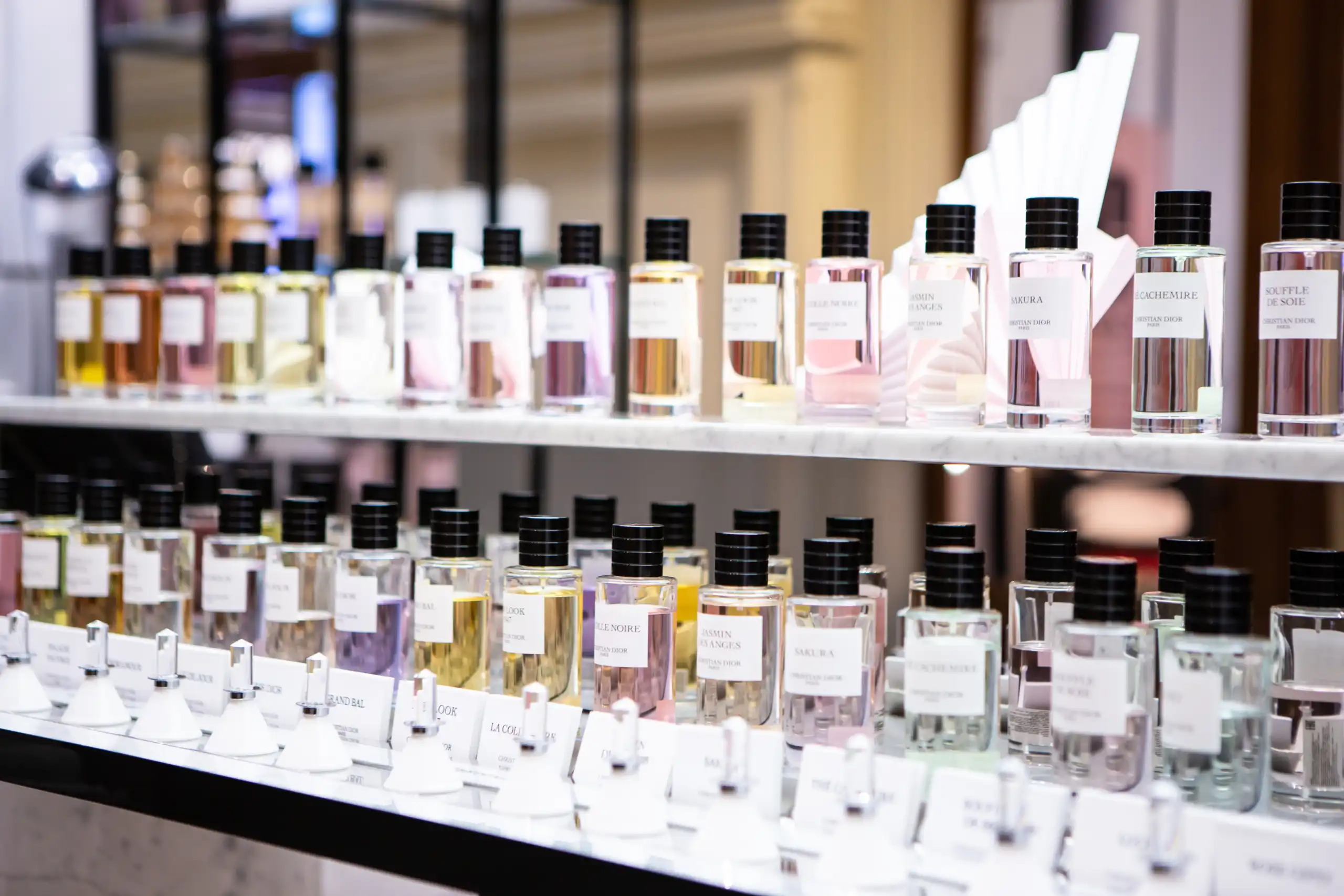
Fragrance is one of the few luxuries that cannot be seen, only remembered. Fashion arrives instantly. It’s defined by silhouette, posture, and intention. Fragrance moves differently. It lingers. It follows through conversation, through movement, through departure. Long after presence has already left the room, scent remains suspended in the air as atmosphere and memory, an aura.
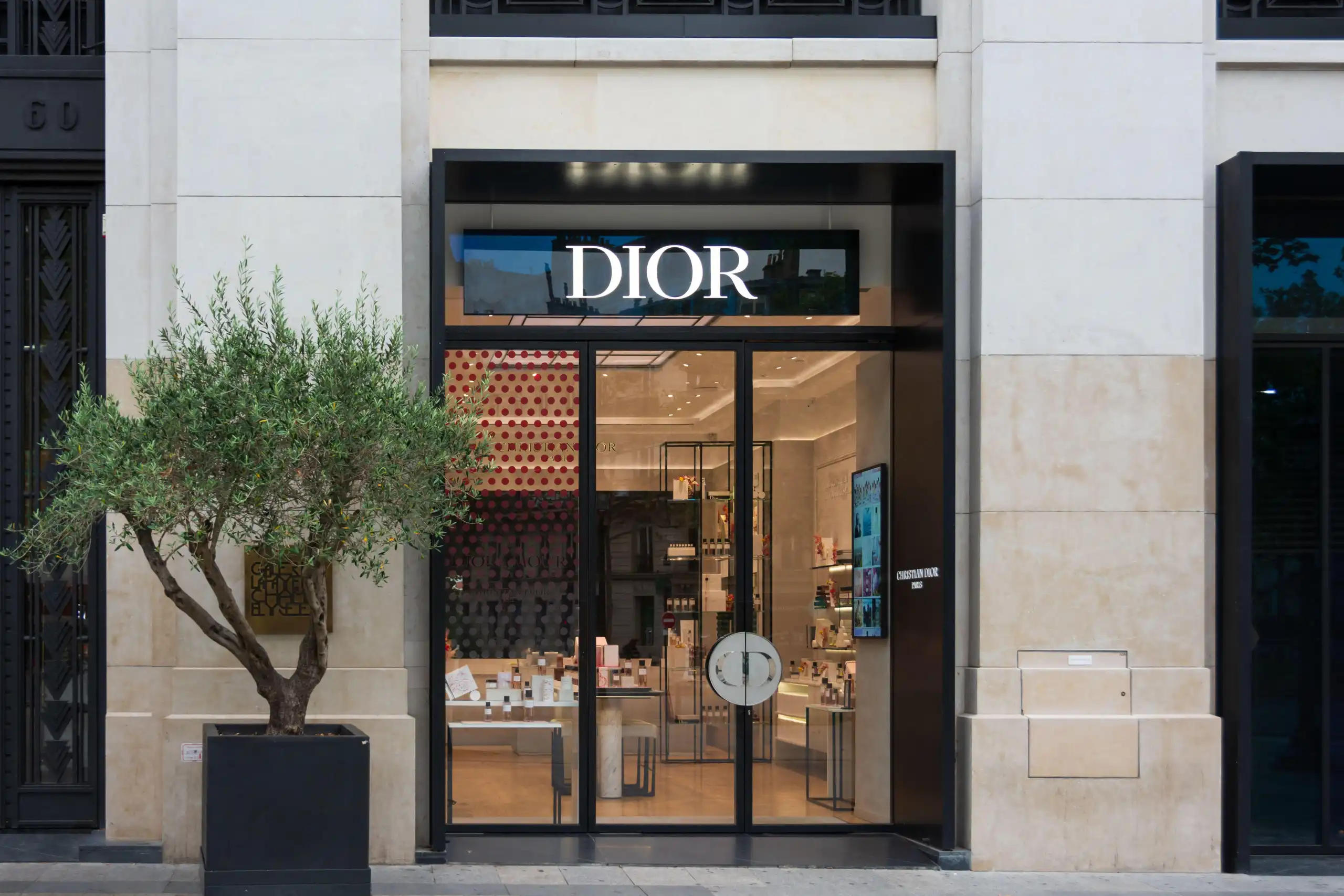
Inside the fragrance salon of Dior on the Champs-Élysées in Paris, this philosophy becomes physical. Nothing inside the space carries urgency. The salon feels composed rather than decorated – glass, light, and fragrance arranged with near architectural precision. Bottles catch warmth instead of glare. Reflections soften instead of compete. Even time itself feels slowed, as though the room has decided attention is the only currency that matters.
Outside, Paris moves with its usual chaotic elegance: traffic folding into roundabouts, heels striking pavement, cigarette smoke dissolving into the air. Inside, everything becomes quieter. Doors close without echo. Voices lower naturally. The atmosphere does not feel transactional. It feels observational.
The Dior experience begins without a product. A fragrance specialist does not begin by asking what kind of perfume someone wants to buy. Instead, the questions are unexpectedly personal. Tell me about yourself. What do you like? Where are you going? At first, the questions feel almost disorienting. Most luxury spaces expect certainty. Dior removes that expectation entirely. There is no pressure to already understand fragrance terminology or arrive with a carefully constructed preference. The specialist acts less like a salesperson and more like an interpreter. They do not overwhelm the room with explanation.
Instead, they observe responses, slowly translating personality into scent. The process begins to feel psychological rather than commercial.
Gradually, it becomes clear that Dior is not trying to match customers with a single “perfect perfume.” The consultation is about something much less fixed. Fragrance here is treated the same way couture treats clothing: situational, emotional, architectural. Different scents exist for different versions of a person.
Some fragrances belong to movement through crowded cities. Others are for calm villages. Some are designed for winter evenings, others for bright summer days. Some scents remain close to the body and linger as someone passes. In Paris, especially, fragrance feels attached to geography.
A smoky leather fragrance carries differently through the night air of New York City than a citrus floral worn on the Amalfi Coast in early spring. Warmer ambers settle naturally into late dinners behind velvet curtains in Paris. Certain scents seem designed for movement. Others feel rooted entirely in stillness. Dior’s process acknowledges this instability. Fragrance is never treated as static. It changes depending on skin, atmosphere, movement, and place.
To create, the fragrance comes the cards. Four of them. Not categories, but worlds. Each card represents something deeply tied to Christian Dior himself. His passions, obsessions, memories, and aesthetic philosophy. Rather than organizing fragrance by technical structure, Dior organizes it emotionally.
The first card, “Passion des Jardins” – Passion for Gardens – holds florals, though even that word feels insufficient. These are not simply the scents of arranged flowers. They are landscapes suspended in memory: fields of lilies of the valley after rain, the manicured gardens of Versailles, his mother’s garden in Normandy at the height of spring. The fragrances carry a softness that feels deeply personal, as though each note has been gathered by hand rather than manufactured. Wearing them feels less like perfume and more like stepping briefly into another environment entirely- one built from nature, nostalgia, and light.
“Architecture Couture” removes softness entirely. Decorated with the illustration of a dress form, this card attracts those in favor of structure. These fragrances feel tailored, deliberate, controlled. If “Passion des Jardins” expands outward, “Architecture Couture” sharpens inward. Nothing feels excessive. Nothing feels accidental.
One of the fragrances that encapsulates “Architecture Couture” is Cuir Saddle. Cuir Saddle draws inspiration from leather, craftsmanship, and the architectural lines associated with Dior couture itself. Worn directly on skin, the fragrance changes dramatically depending on body chemistry, becoming more intimate and specific to the individual wearing it. The leather softens with warmth. Woods deepen slowly over time. The fragrance behaves like fabric being shaped to a body.
Then comes “Pouvoir du Talisman” – Power of the Talisman. These fragrances feel grounded, darker, and almost spiritual in their composition. Woods, amber, incense, smoke, musk. They do not announce themselves loudly. Instead, they settle slowly into a room with quiet gravity. The effect is more atmospheric than decorative. These are fragrances that become part of someone rather than something simply applied before leaving the house. Even after someone exits a room, traces remain suspended behind them. The French call this sillage, the invisible trail a fragrance leaves in movement. Within “Pouvoir du Talisman”, fragrance begins to resemble memory itself: difficult to hold directly, but impossible to fully forget.
The final world, “Plaisirs de la Vie” – Pleasures of Life – carries warmth differently. The fragrances remain sensual, but softer. Comfort replaces mystery. Vanilla, amber, spice, and sweetness become less theatrical and more intimate. For Christian Dior, pleasure was deeply tied to atmosphere: dinners stretching late into the evening, candlelight reflecting against glass, desserts arriving slowly at the end of conversation.
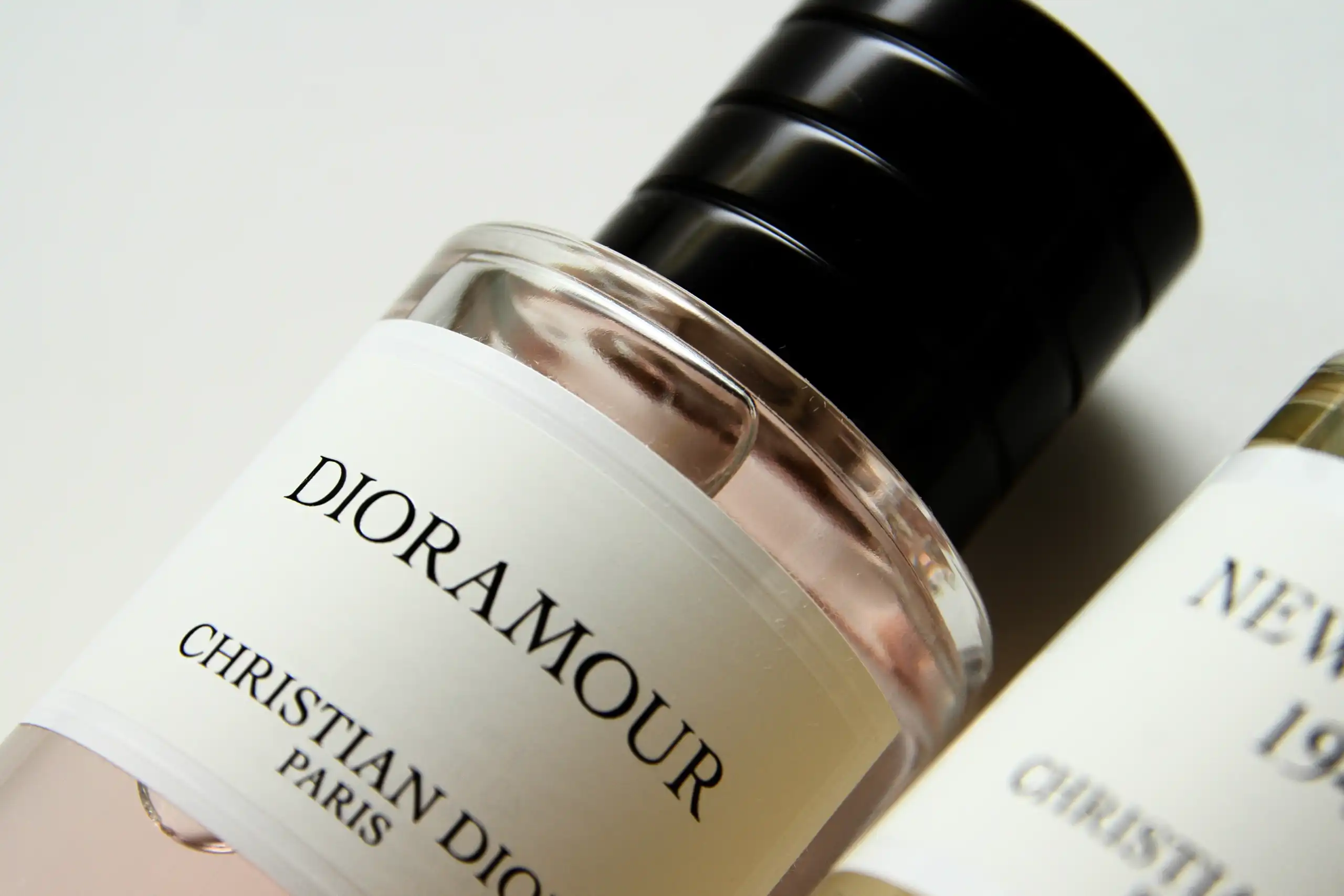
Vanilla Diorama becomes the clearest expression of this philosophy. Inspired by a dessert once served at Maxim’s in Paris, the fragrance captures the environment surrounding indulgence itself. Low lighting reflected against polished silver. Velvet shadows along restaurant walls. The warmth of conversation lingering long after plates have already been cleared. The fragrance not only serves as a nostalgic reminder of Christian Dior’s favorite dessert, but it also recreates the feeling associated with it.
This becomes the defining difference within Dior’s process. The fragrances are never presented merely as smells. They are presented as atmospheres, identities, environments, and emotional states. And once applied to skin, they continue changing. On paper, fragrance feels immediate and readable. On skin, it becomes unstable. Heat bends it. Chemistry edits it. Time rearranges it entirely. Florals slowly soften into sweetness. Woods deepen hours later into something darker and warmer. Leather loses sharpness and develops texture. Vanilla expands gradually in its progression. Nothing remains exactly as it first appeared.
What defines the Dior experience is not selection, but recognition. People arrive believing they are choosing a fragrance. What they slowly realize is that Dior’s process is revealing how they want to move through the world around them. A scent for travel. A scent for comfort. A scent for experiencing something or somewhere new. A scent for enhancing an identity.
Because fragrance does not stay where it is placed. It moves through cities and lingers after departure, caught in the fabric of a silk scarf folded carefully into a suitcase, drifting in the salty air by the sea, and settling around a candlelit dinner. It follows movement. It attaches itself to memory. Long after the moment itself has passed, the fragrance remains.
On skin. In fabric. In memory.