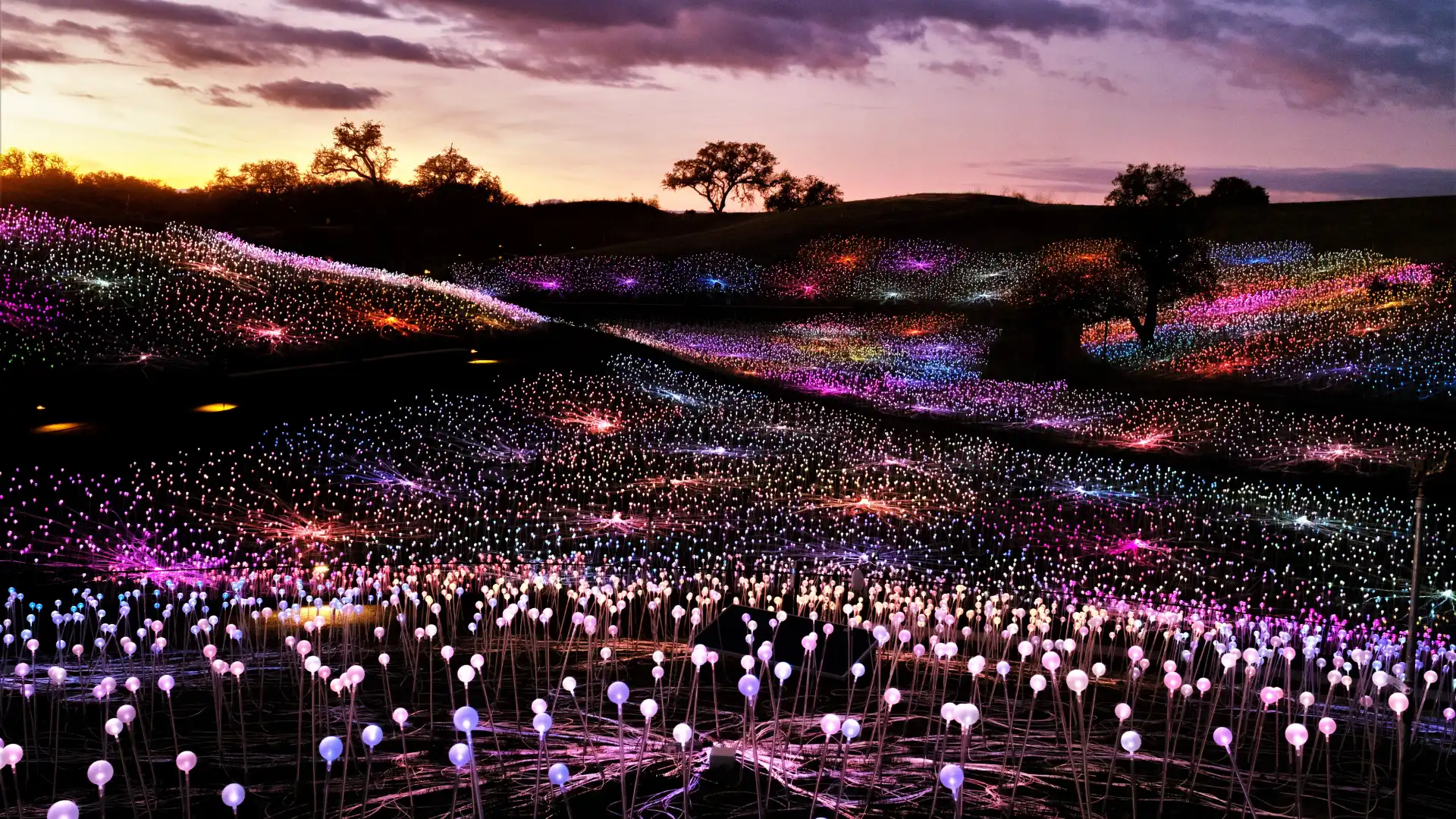
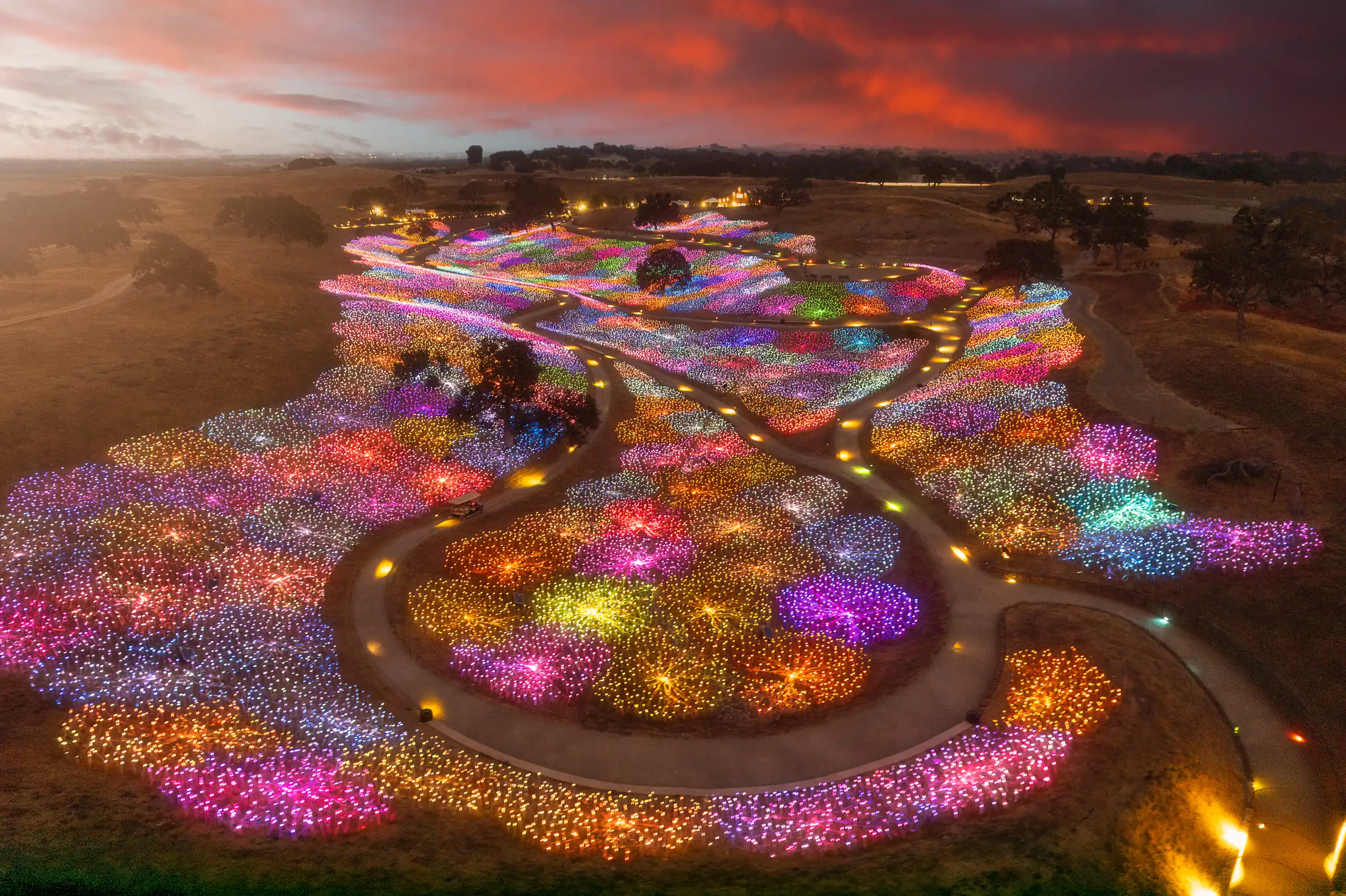
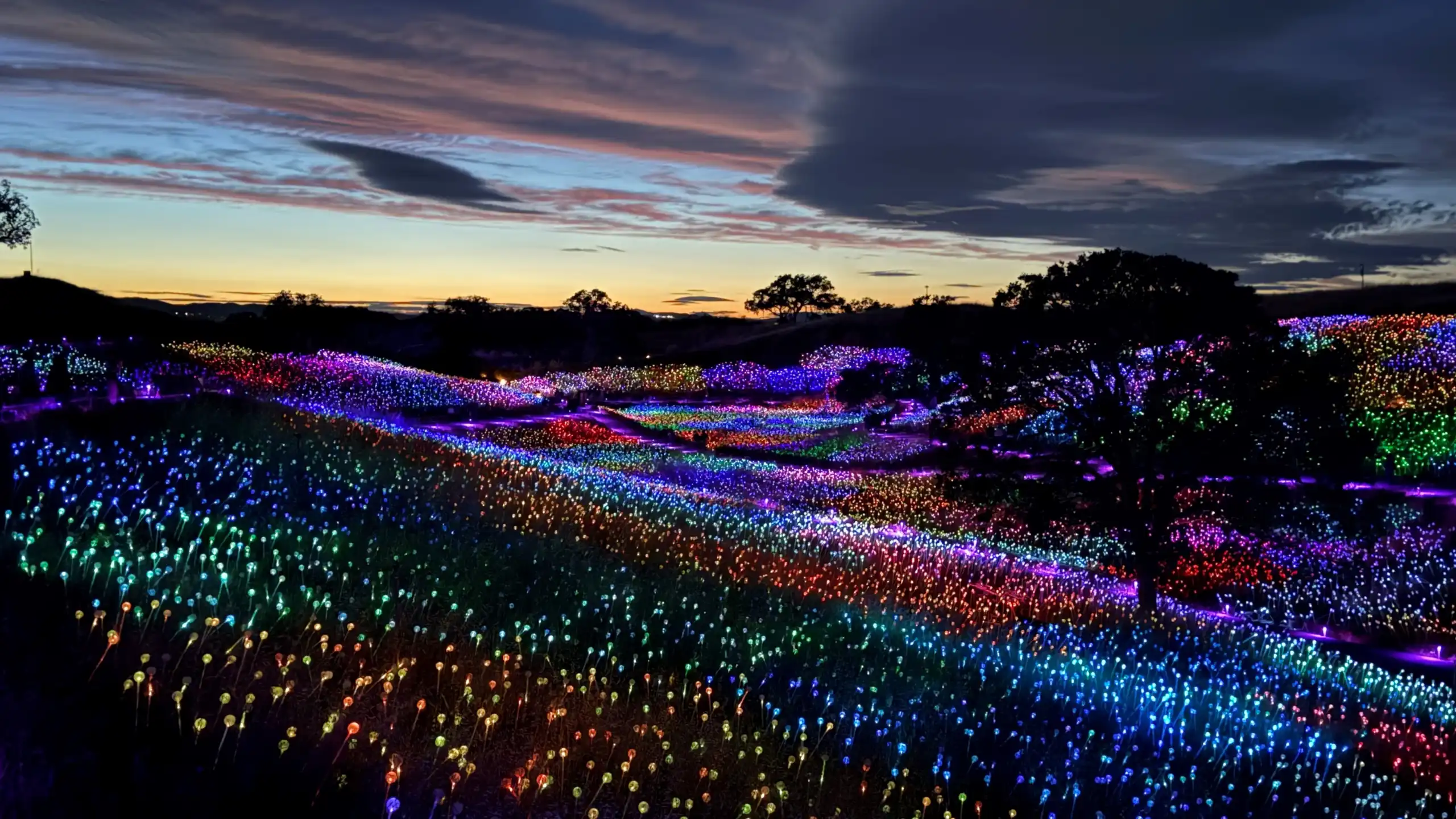
At its core, Sensorio is not trying to dazzle. There are no loud spectacles or choreographed bursts of color. Instead, thousands upon thousands of low-slung glowing orbs are planted across the terrain. As daylight fades, they wake up one by one, until the entire hillside is flooded in light.
The pathways weave through fields that stretch farther than you expect, and the light creates a strange sense of scale that is both intimate and vast. It does not feel like touring an art exhibit.
What makes Sensorio interesting is how little it tries to explain itself. The work isn’t presented with interpretation or instruction. There isn’t a single official “meaning” of Sensorio, and that’s partly the point. The installation, designed by artist Bruce Munro, is to be experienced more than decoded. Still, there are a few strong interpretive threads that people tend to return to after visiting.
Some of the most common are scale and humility. The glowing spheres spread across the hills resemble both crops and stars, depending on how your eyes adjust. Standing among them, you get a sense of being small in a landscape that doesn’t center you. The work gently shifts your sense of proportion, making the land feel vast and the individual body small.
Another interpretation is the idea of humans blending into nature. The lights are clearly artificial, but they’re arranged in a way that echoes agriculture, with rows, spacing, and rhythm. During the day, the fields sit dormant like farmland. At night, they transform into something closer to a constellation or data field. That overlap tends to linger in people’s interpretation.
There’s also a strong temporal reading. Sensorio only fully exists at night, and even then, it’s always changing. That makes time feel physical. You don’t just observe evening ascending; you move through it. Many people come away with a heightened awareness of transition itself.
Part of Sensorio’s impact comes from its setting. Paso Robles, California, is known for vineyards and oak-studded hills. That openness becomes essential to the artwork. Without city light to compete with it, Sensorio doesn’t fight for attention. It can simply unfold. The darkness becomes a kind of frame.
At Sensorio, time stretches. Steps slow down. The idea of looking at art changes, as though you’re inside of it rather than just observing it.
And when the night is deep enough, and the fields are fully lit, there’s a moment when the installation stops feeling like something built and starts feeling like something discovered—like it was always there, waiting for the right conditions to reveal itself.
At the edge of California wine country, Sensorio Paso Robles transforms the landscape into something almost otherworldly. An illuminated dreamscape where art, technology, music, and nature combine into a singular immersive experience.
Originally conceived by artist Bruce Munro, Sensorio emerged as one of California’s most ambitious outdoor light installations, drawing visitors from around the world. Paso Robles has long cultivated a spirit of discovery and reinvention, and Sensorio reflects that ethos perfectly — expansive, cinematic, and quietly transformative.
The installation’s centerpiece, Field of Light, remains its most iconic attraction. Thousands upon thousands of softly glowing fiber-optic spheres blanket the hillside in shifting hues of violet, gold, emerald, and deep blue, rippling across the terrain like bioluminescent wildflowers. Walking through the pathways at dusk feels strangely meditative. The lights pulse gently against the darkening horizon while ambient music drifts through the open air, creating a sensory atmosphere that is simultaneously intimate and monumental.
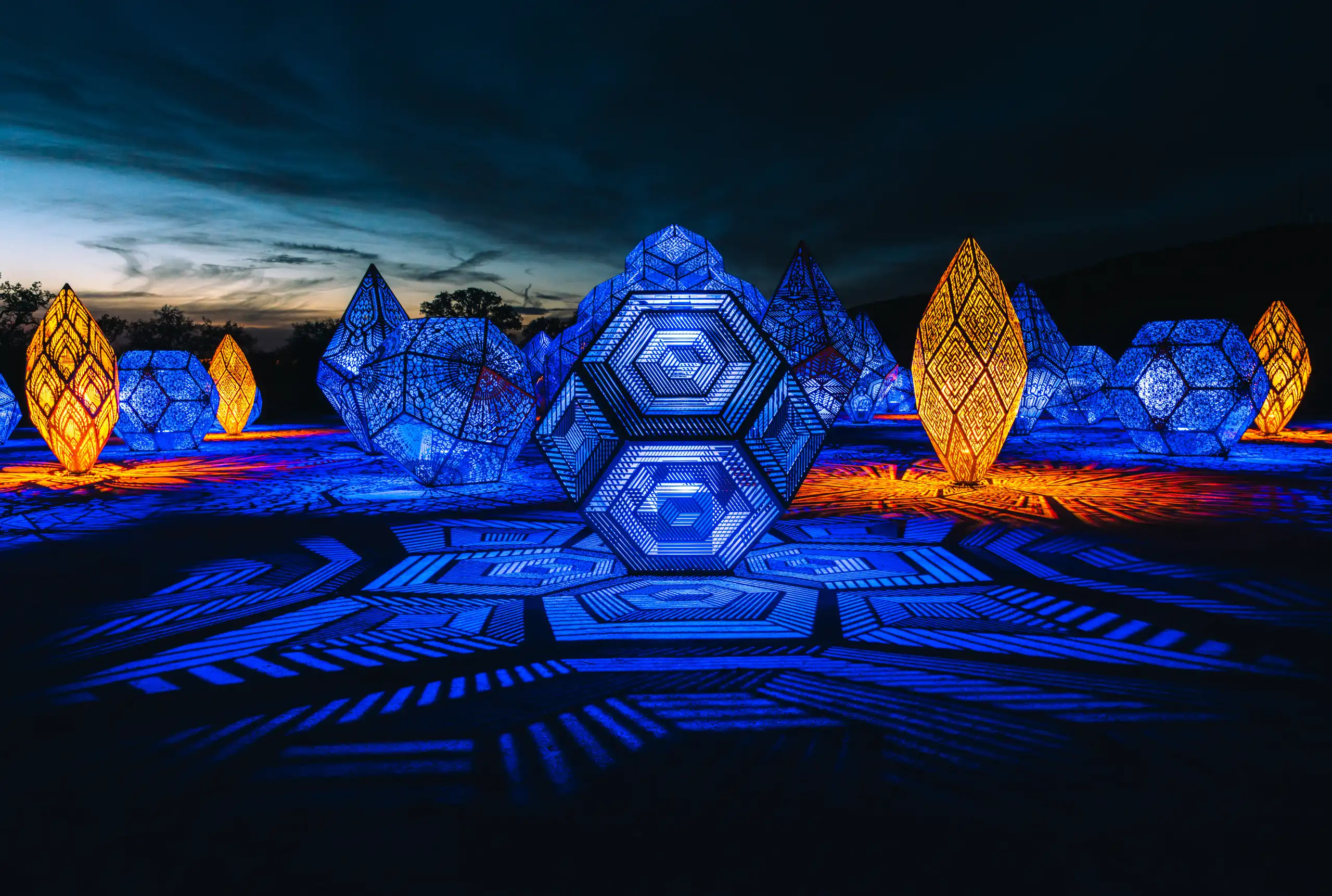
Unlike a traditional museum experience, Sensorio encourages movement and immersion. Guests wander slowly through illuminated pathways, pausing for photographs, conversation, or moments of stillness beneath the stars. There are no gallery walls or prescribed routes. Instead, the landscape itself becomes the canvas. The openness of the setting is central to the experience; visitors are constantly aware of the cool evening breeze, the scent of dry earth, and the immense night sky stretching over California’s Central Coast.
Over time, Sensorio has expanded beyond its original installation into a larger campus of immersive light-based works. Exhibits such as Light Towers and Gone Fishing introduce dramatic vertical forms and kinetic movement, layering additional dimensions onto the environment. Towering, illuminated columns shift colors in synchronized rhythm, while suspended installations create the illusion of floating lanterns dancing in darkness. The result feels less like an exhibition and more like stepping into a futuristic landscape opera staged entirely outdoors.
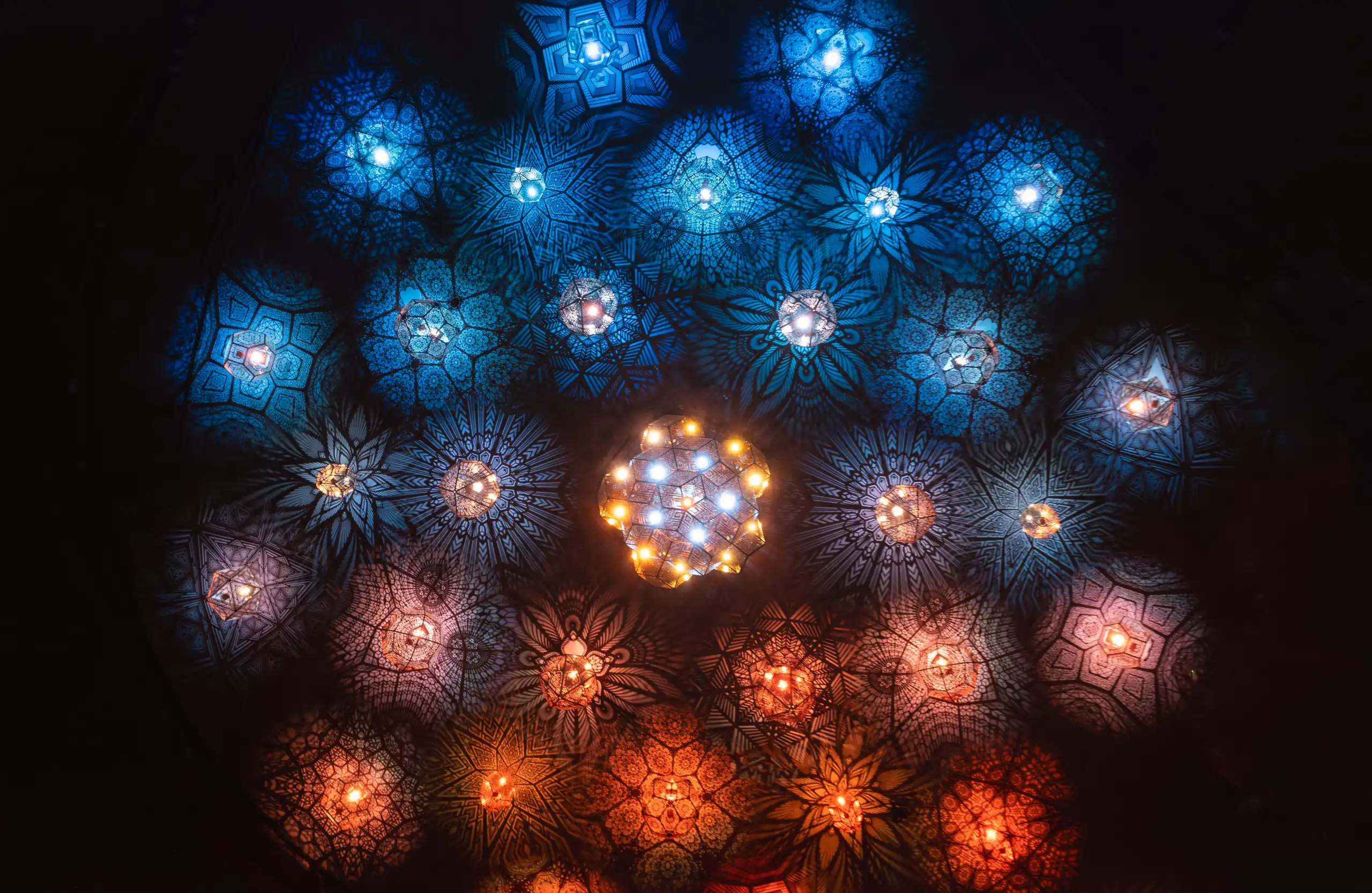
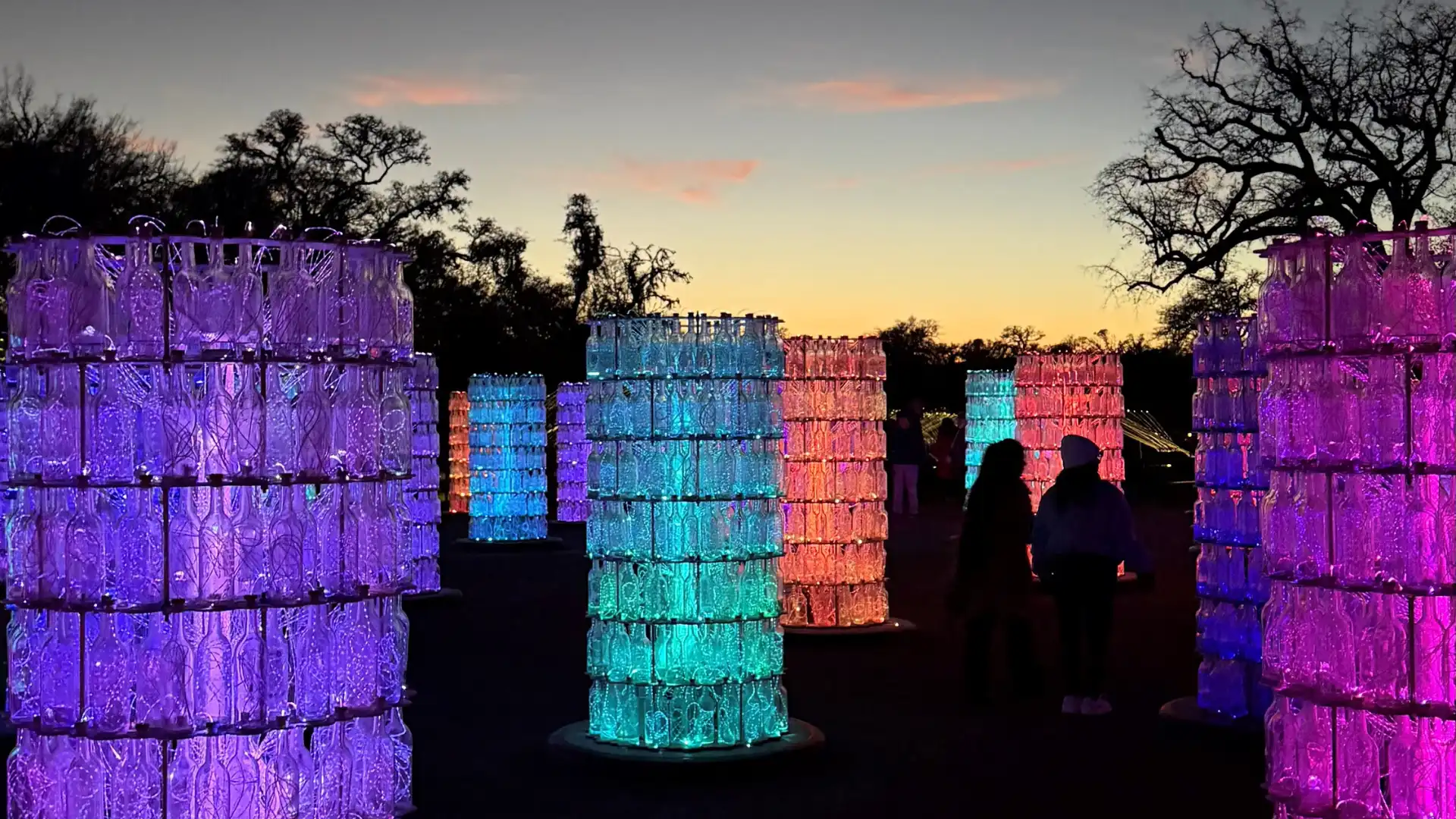
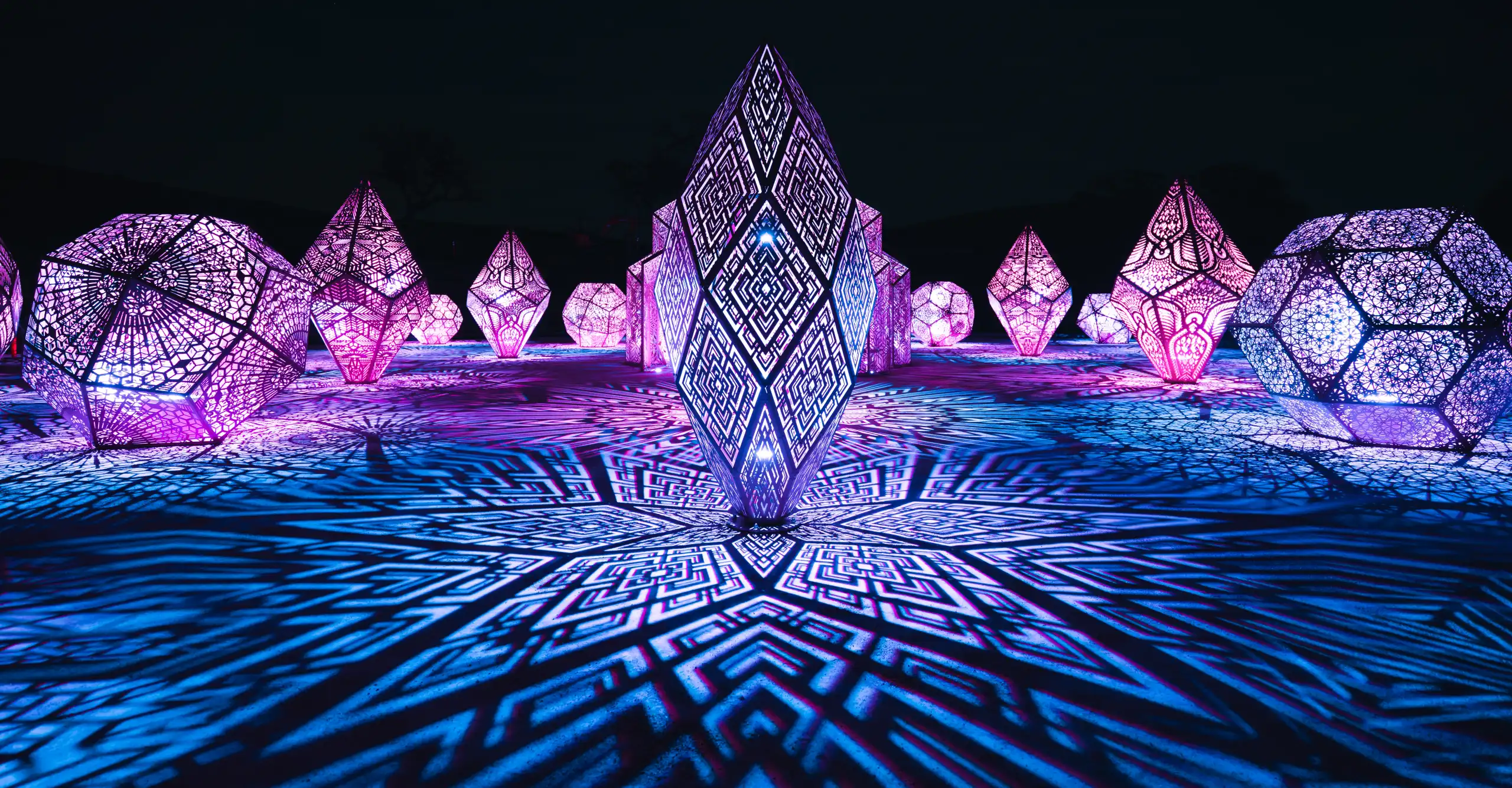
Yet what makes Sensorio particularly compelling is its emotional accessibility. Contemporary art installations can sometimes feel intellectually distant or deliberately opaque. Sensorio, by contrast, invites immediate wonder. Children run excitedly through glowing pathways while couples linger over wine against panoramic sunset views. Amateur photographers and seasoned creatives alike find endless visual inspiration in the interplay between artificial light and natural terrain. It’s immersive art without pretense — ambitious in scale yet deeply human in feeling.
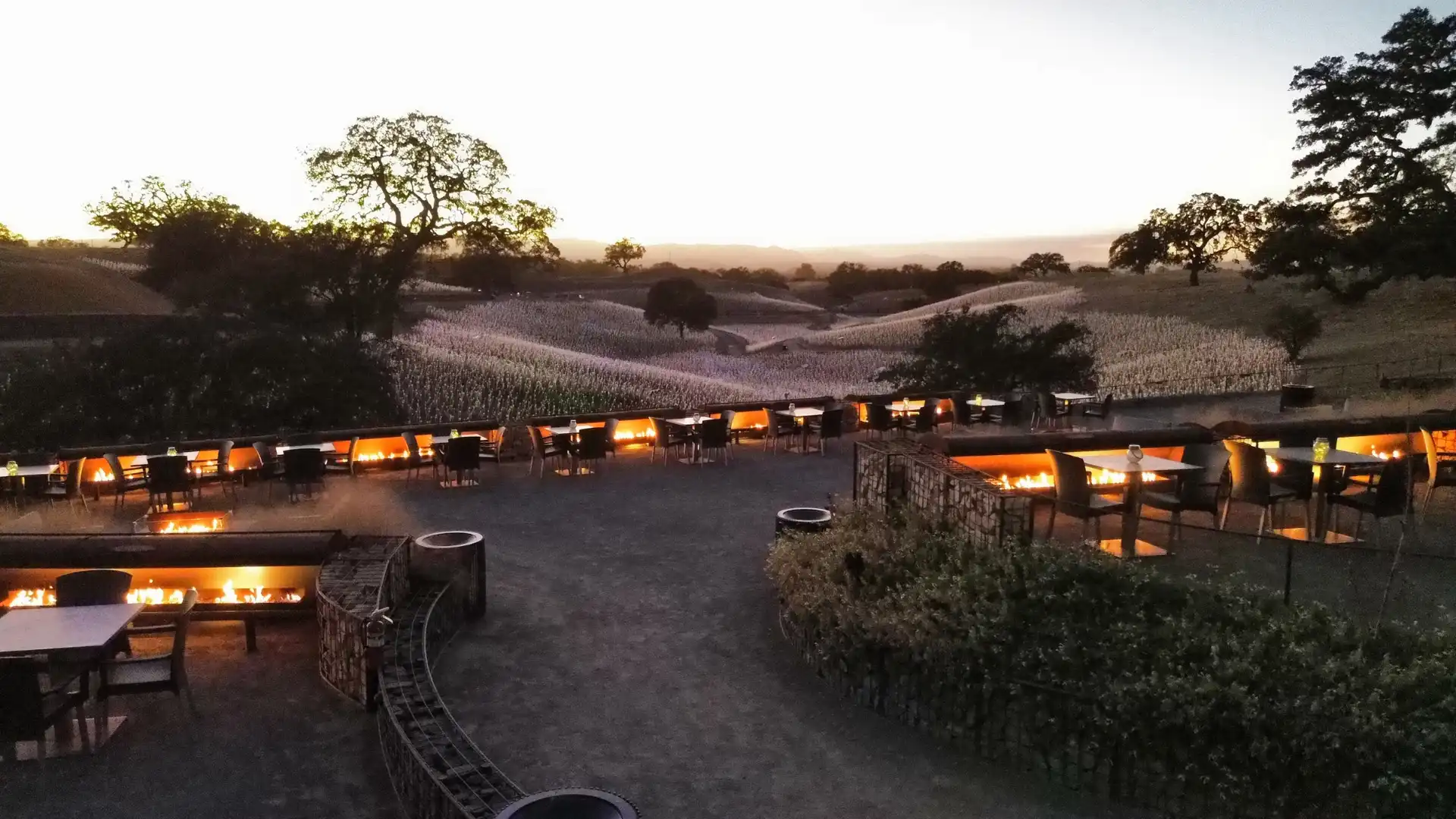
The venue’s culinary and wine offerings further root the experience in Paso Robles culture. Guests often begin the evening with local wines and elevated Central Coast cuisine from terrace dining areas overlooking the illuminated fields. As darkness deepens, glasses of Syrah and Pinot Noir accompany one of California’s most visually striking nighttime experiences. This integration of food, wine, landscape, and art is precisely what distinguishes Sensorio from more urban immersive exhibits. It belongs entirely to its environment.
In many ways, Sensorio reflects the evolution of modern travel itself. Today’s luxury travelers increasingly seek experiences that feel emotional rather than merely observational — places that create atmosphere, memory, and sensory connection. Sensorio accomplishes this effortlessly. It is not simply something to see; it is something to feel.
And perhaps that is why the installation continues to resonate so deeply years after its debut. In an era saturated with digital stimulation and fleeting spectacle, Sensorio offers a rare kind of quiet awe. Beneath the stars of Paso Robles, surrounded by fields of luminous color, visitors are reminded how transformative beauty can be when art works in harmony with the landscape instead of competing against it.