In place of sensational claims about a “record-breaking Codex auction,” Leonardo da Vinci’s legacy in 2026 is quieter, more technical, and arguably more significant. In Florence, the focus is about reconstruction and access led in part by the Museo Galileo. The Museo continues to play a central role in the digital reassembly and study of Leonardo’s scattered manuscripts.
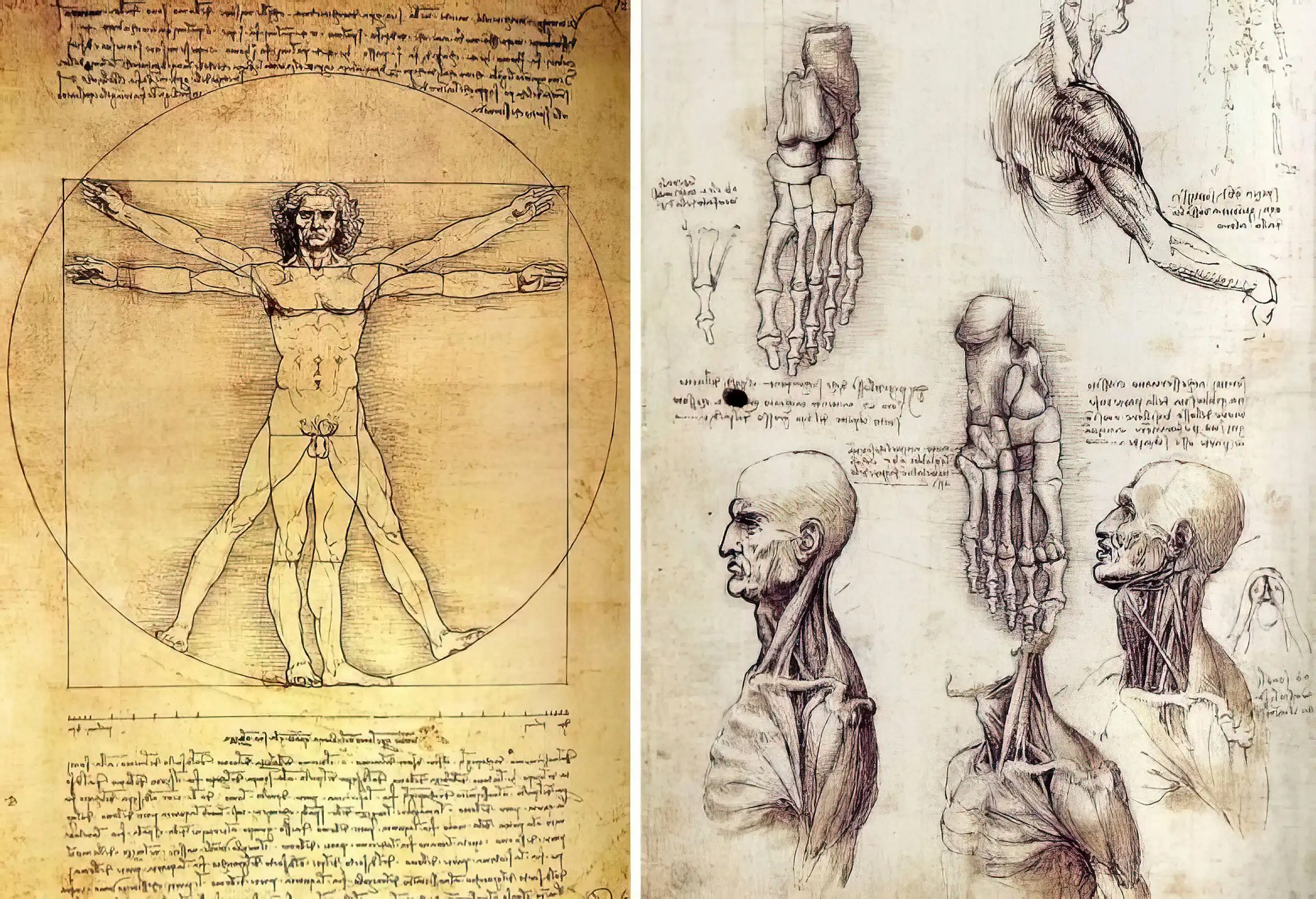
The focus is on long-term digital reconstruction efforts to virtually reassemble Leonardo’s fragmented notebooks from collections dispersed across Europe. The initiative reflects a broader shift in how Renaissance artifacts are studied and presented away from isolated objects and toward interconnected digital archives. As Leonardo’s codices – his scientific notebooks covering topics from hydrodynamics to anatomy and engineering – are not held in a single collection, but are instead spread across institutions including libraries in London, Paris, and Milan, this Florence-based program aims to reunite these scattered pages in a virtual environment. This will allow researchers and visitors to explore them as coherent systems for the first time in centuries.
According to museum-led presentations and ongoing digital humanities work, the project uses high-resolution imaging, metadata mapping, and cross-institutional cataloging to reconstruct relationships between pages that were separated over time. The result is not a physical exhibition but a continuously evolving digital framework that enables Leonardo’s scientific reasoning to be studied in sequence rather than in isolation.
Importantly, this shift also reframes public narratives that have occasionally drifted into misinformation or sensationalism, such as claims of recent multimillion-dollar Codex auctions. In reality, no such sale has taken place, and Leonardo’s manuscripts remain primarily in institutional and private collections.