“The octopus is a solitary, short-lived marine animal that likes to keep close to home, to hunt, to eat, to reproduce. Why would it need a mind anything remotely like ours? To all appearances it is about as far removed from Homo sapiens as any animal could be. But appearances can be deceiving, and, in fact, we share a number of important evolutionary traits with octopuses.”
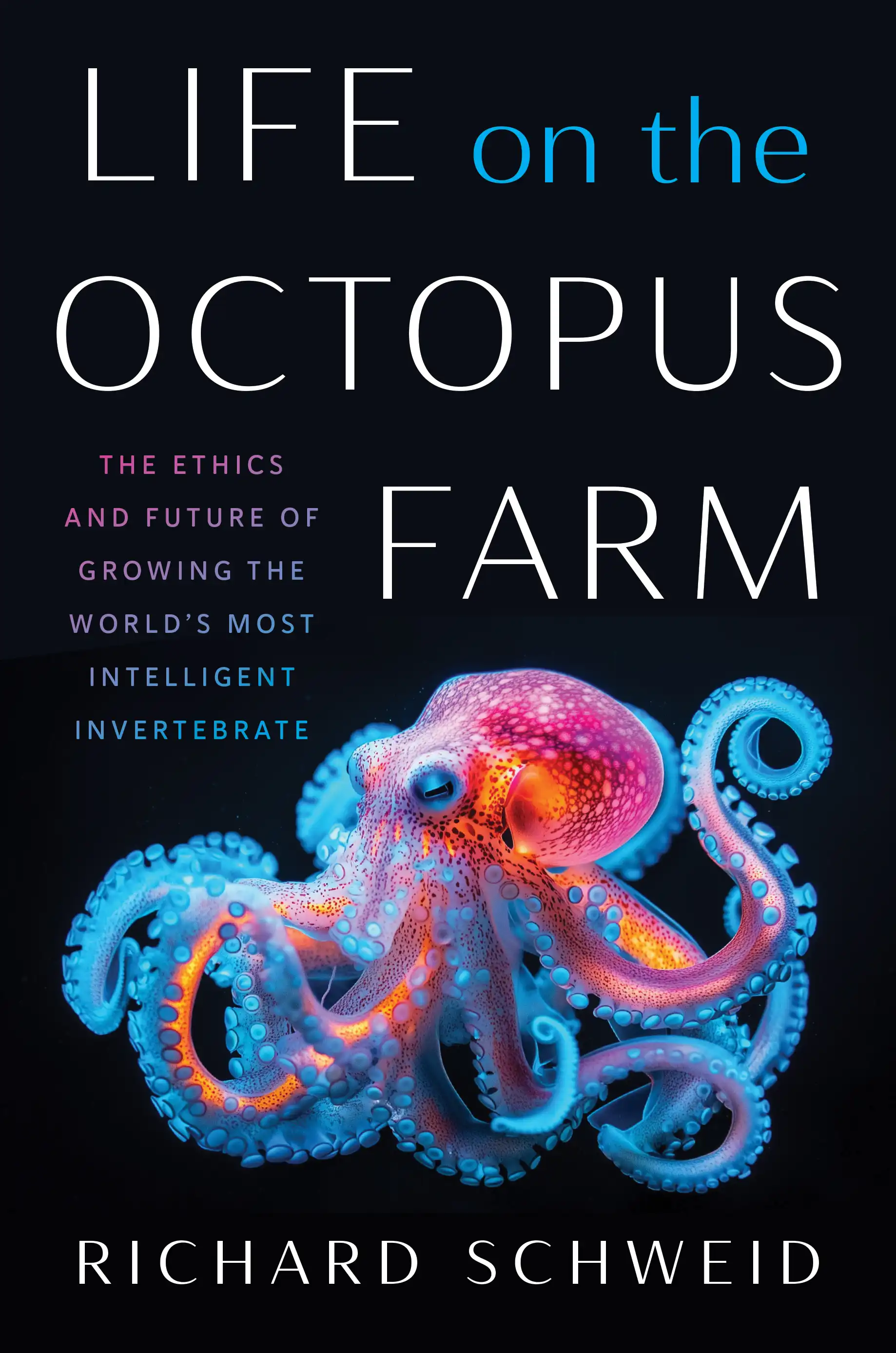
Richard Schweid’s Life on the Octopus Farm is a captivating exploration of one of the ocean’s most intelligent and mysterious creatures. It is also an exploration of humanity’s complicated relationship with the natural world. Blending science, history, environmental concerns, and personal observation, the book takes readers into the fascinating world of octopuses while examining the challenges and ethical questions surrounding attempts to farm them.
At the center of Schweid’s narrative is the pursuit of understanding the octopus as a source of food. As researchers and entrepreneurs explore the possibilities of octopus aquaculture, the writer examines the biological complexity of these remarkable animals, whose intelligence, problem-solving abilities, and unique behaviors have long fascinated scientists. The result is not only a story about marine farming, but also a broader reflection on how humans interact with species that are increasingly recognized as sentient and extraordinary.
One of the book’s greatest strengths is Schweid’s ability to make complex scientific and environmental issues accessible and engaging. He combines investigative reporting with vivid descriptions of marine life, taking readers from research facilities and fishing communities to the wider ecological systems affected by human choices. Through these perspectives, he raises important questions about sustainability, conservation, and the responsibilities that come with our growing knowledge of other forms of life.
Beyond its exploration of octopuses, Life on the Octopus Farmis a thoughtful examination of the tension between innovation and ethics. The book considers whether technological progress should always be pursued simply because it is possible, or whether a deeper understanding of the natural world should influence the decisions we make. Schweid encourages readers to reconsider familiar ideas about food production, animal intelligence, and the boundaries between humans and other species.
Written with curiosity and a sense of wonder, Life on the Octopus Farm is a definite read for anyone interested in marine biology, environmental issues, food culture, or the future of our relationship with nature. It is both a fascinating portrait of the octopus and a timely meditation on the choices we face as we seek to balance human needs with respect for the living world.